
How to Teach Sit and Stay: Core Commands for Obedient Dogs
TrainDogBuddy Team
Professional Dog Mentors
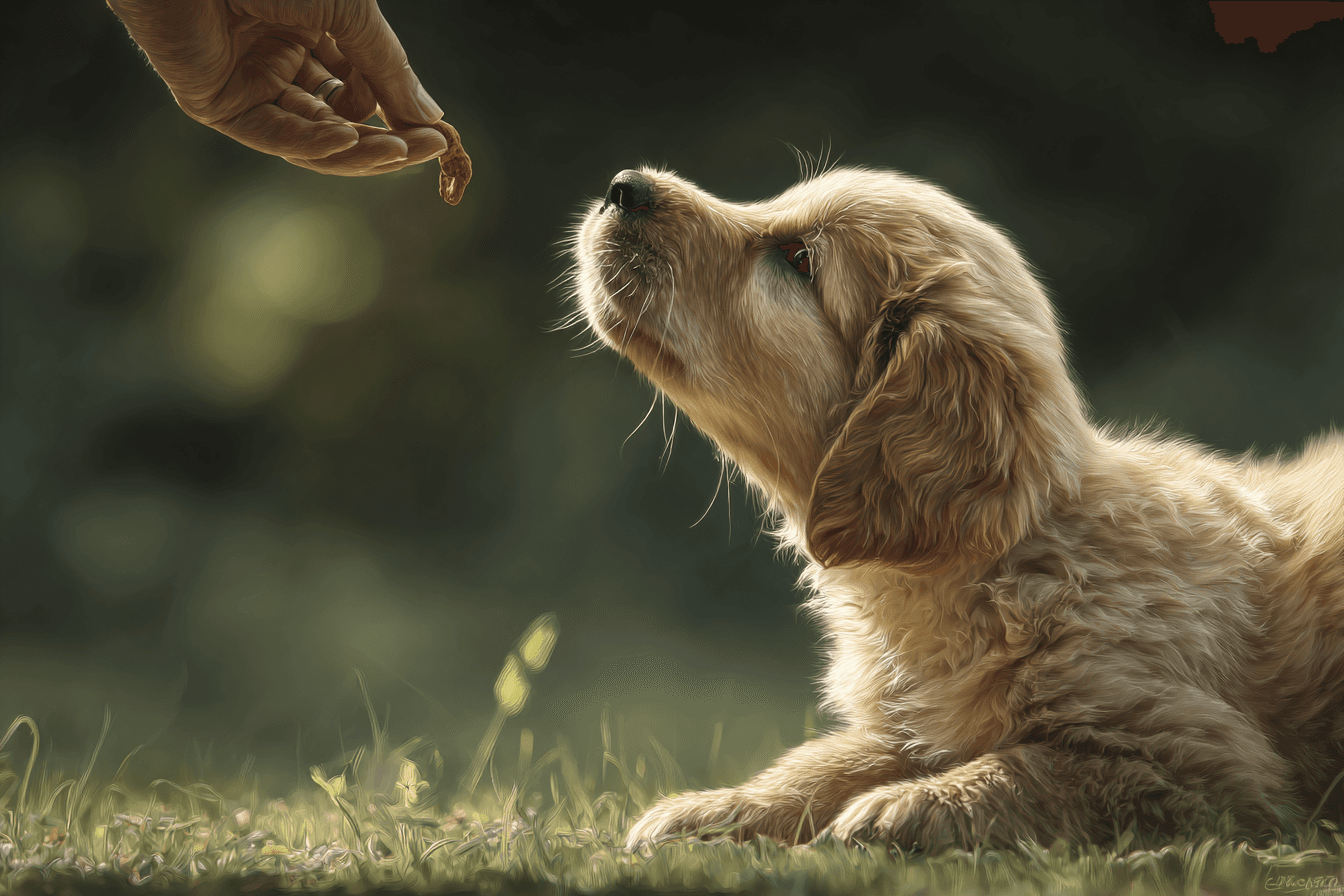
Imagine this: the front door is open, a squirrel darts across the yard, or a visitor arrives with exciting energy. In these moments of high distraction, a reliable sit command dog and a rock-solid stay command dog aren’t just party tricks, they are essential tools for safety and peace of mind. Teaching your dog these core dog commands is the foundation of a harmonious relationship built on mutual understanding and respect.
For new dog owners, pairing this with early guidance on when to start dog obedience training helps you set realistic expectations and tailor your approach for your dog’s age.
This guide will walk you through the simple, positive steps to teach a dog to sit and teach a dog to stay. Whether you’re starting with a bright-eyed puppy or an adult dog full of zest, this obedient dog training method works. Let’s unlock the secret to a calmer, more connected life with your four-legged friend.
The Golden Rule: Patience and Positivity
Before we dive into the “how,” let’s set the stage. Successful obedience training like training your dog to sit isn’t about dominance; it’s about communication.
Your tools are patience, high-value treats (think small pieces of chicken, cheese, or hot dog), and a happy, encouraging tone. Keep training sessions short 5 to 10 minutes to keep your dog engaged and excited to learn.
If you’re also crate training, you can combine short obedience sessions with breaks in the crate our guide to crate training a puppy with treats shows how to use rewards effectively in both situations.
Part 1: How to Teach Your Dog to Sit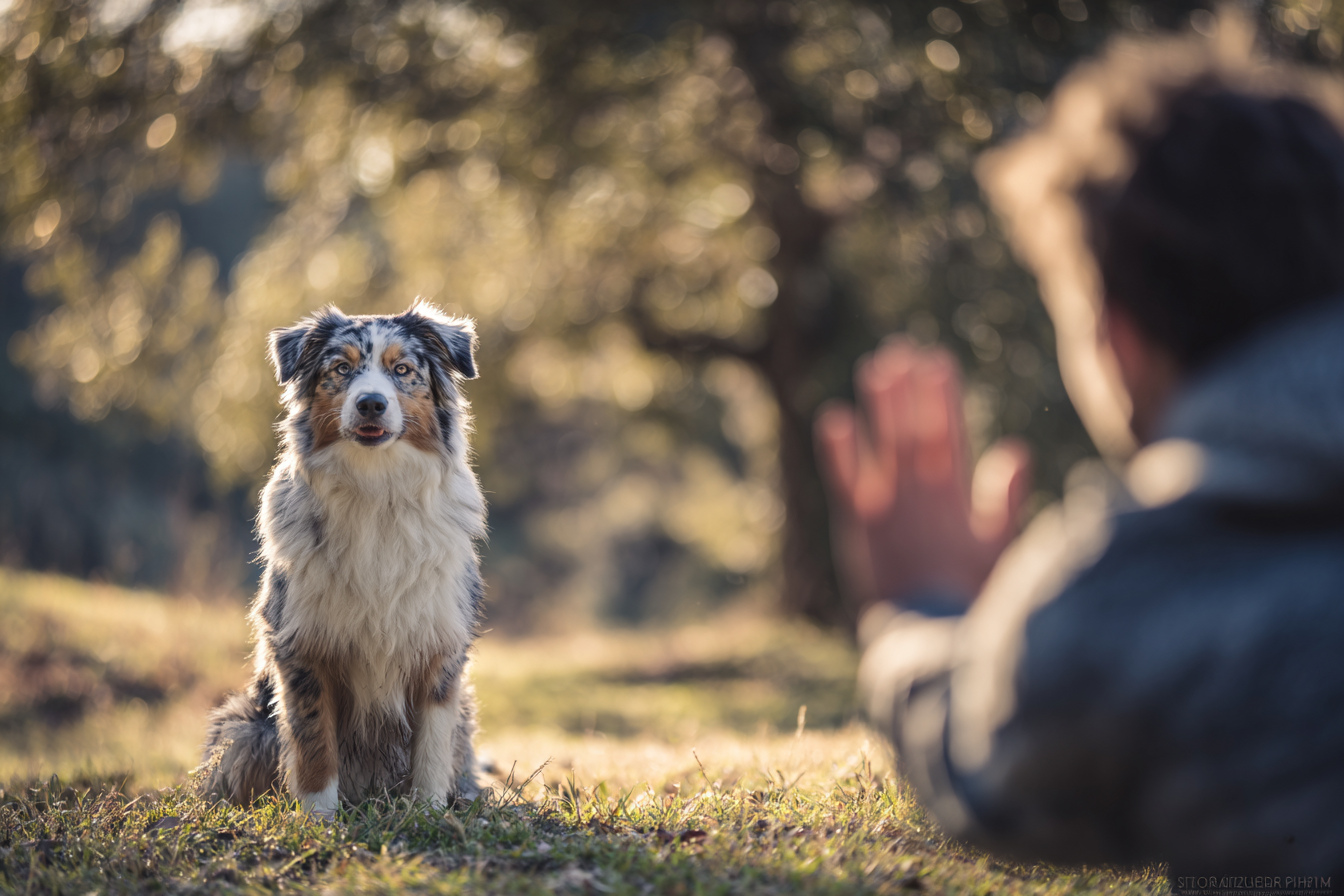
The sit command dog is often the very first skill in any puppy obedience training program, and for good reason. It’s a natural position for a dog, making it easy to capture and shape. It’s also the perfect “please” for everything from getting dinner to putting on a leash.
If you’re new to using positive reinforcement tools, the clicker training method is a powerful way to mark good behavior precisely including the perfect sit.
The Lure Method: A Step-by-Step Guide
- Get Ready: Stand in front of your dog in a low-distraction environment. Have a handful of those high-value treats ready.
- The Lure: Hold a treat in your closed fist, just in front of your dog’s nose. Don’t let them snatch it!
- The Movement: Slowly move your hand up and slightly back over their head. As their nose follows the treat, their bottom will naturally lower to the ground.
- Mark and Reward: The instant their hindquarters touch the floor, say a clear marker word like “Yes!” or use a clicker, and immediately give them the treat.
- Add the Cue: Once your dog is reliably following the lure into a sit (after 5-10 successful repetitions), it’s time to add the verbal cue. As you begin to move your hand, say “Sit” clearly. Then, lure them into position, mark, and reward.
- Phase Out the Lure: After a few sessions, try giving the “Sit” command without the lure in your hand. If they sit, throw a party and give them a treat from your other hand! This teaches them to respond to the word, not just the hand signal.
Pro Tip for Puppies: For very young pups, check out our guide on crate training puppy for a den environment it helps them focus and feel calm during learning sessions.
Part 2: How to Teach Your Dog to Stay
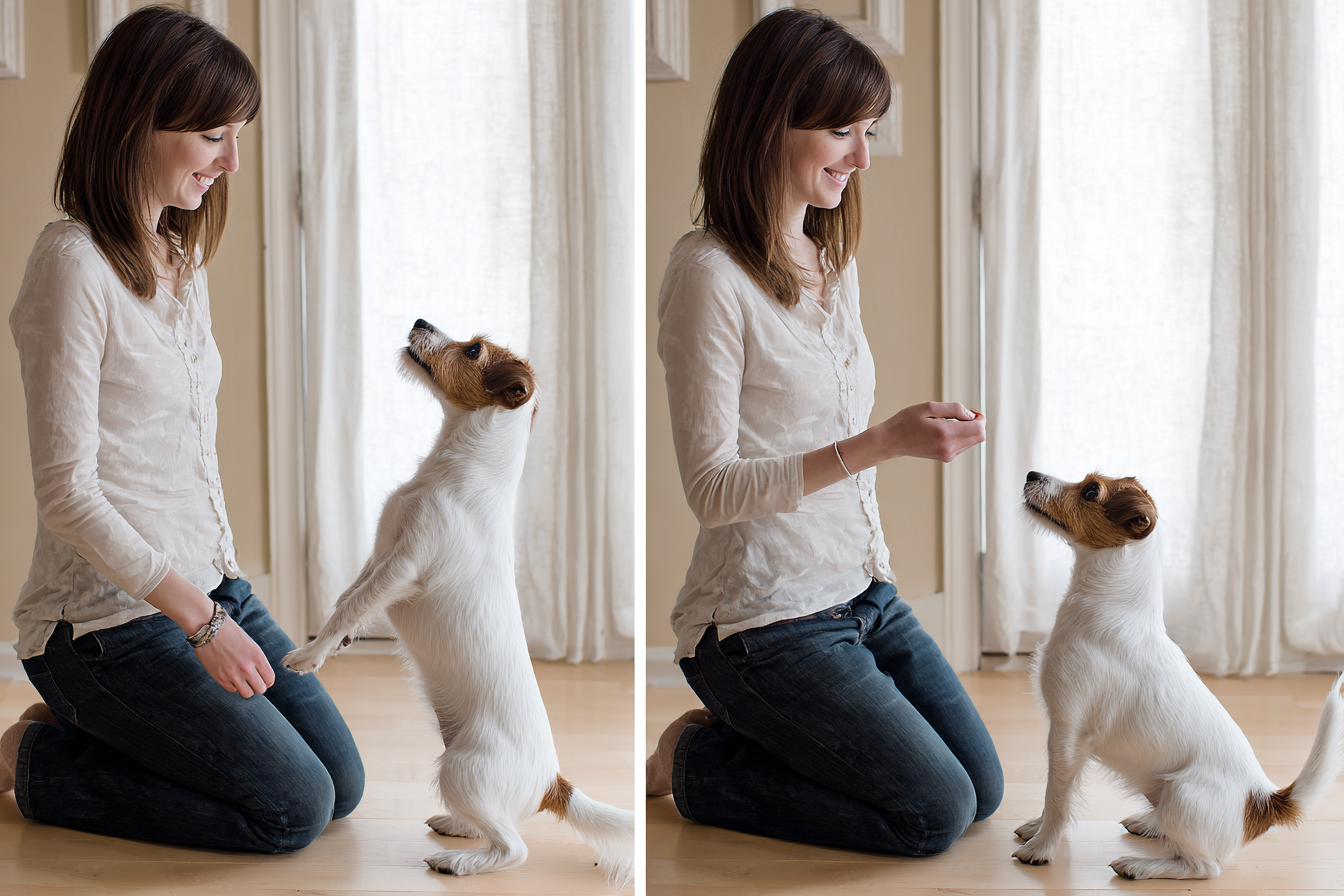
Once your dog has mastered the sit, you can build on that success to teach them to stay — essentially a lesson in impulse control.
The stay command builds trust and patience, much like crate training at night or while you’re away helps dogs learn calm independence.
Building the Stay in Three Dimensions
Never rush the stay command dog. We build it gradually by adding the “Three D’s”: Duration, Distance, and Distraction. Master one before moving to the next.
Step 1: Duration (Teaching the “Wait”)
- Ask your dog to “Sit.”
- Hold your palm open towards their face, like a stop sign, and say “Stay.”
- Wait for just one second. If they don’t move, mark with “Yes!” and reward.
- Gradually increase the time two seconds, then five, then ten before marking and rewarding. If they break, simply ask for the sit again and try a shorter duration.
Step 2: Distance (Taking a Step Back)
- Ask for a “Sit” and then a “Stay.”
- Take one small step backward.
- Immediately step back to your dog, mark (“Yes!”), and reward. Do not call them to you for the reward yet; you are rewarding them for holding their position.
- Gradually increase the number of steps you take. Practice moving to the side and eventually walking a full circle around your dog.
Step 3: Distraction (Proofing the Behaviour)
This is the final and most challenging stage. Once your dog can hold a stay for 30 seconds with you 10 feet away, start adding mild distractions.
- Ask for a “Sit-Stay” in a slightly more challenging environment, like your driveway.
- While they are staying, gently toss a treat on the floor near them (but don’t let them get it!). If they hold the stay, reward them with an even better treat from your hand.
- Practice with you clapping your hands, doing a single jump, or having another person walk by at a distance.
For especially wiggly pups, pair this with cue training for potty training it strengthens their impulse control and response to verbal cues.
Troubleshooting Common Hurdles
- My dog won’t sit: If your dog backs up instead of sitting, practice with their rear against a wall so they can’t back away.
- My dog breaks the stay constantly: Go back a step! You’ve increased the difficulty too quickly. Make the exercise easier (shorter duration, less distance) so they can succeed 8 out of 10 times.
- My puppy just wants to play!: This is normal for puppy training to sit. Use their meal kibble as training treats before dinner when they’re hungry, and keep sessions incredibly short and fun.
If your dog still struggles to focus, make sure they’re getting enough mental and physical exercise. Learning how to crate train a puppy or even revisiting tethering methods for training can help redirect energy constructively.
The Power of the Combo: “Sit” and “Stay” for Real-Life Success
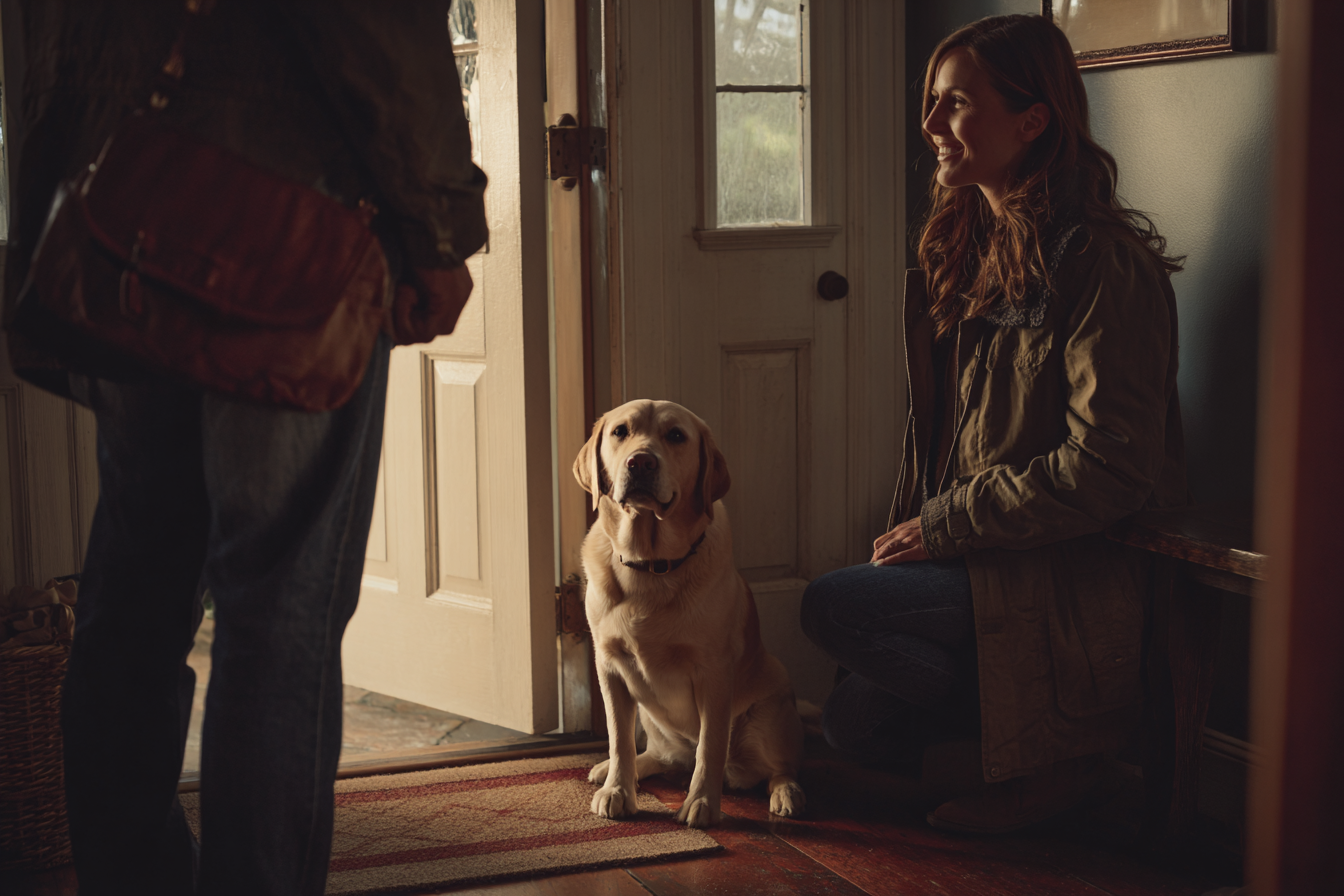
The true magic happens when you combine these commands. Use the dog sit stay for:
- Greeting Guests: Ask your dog to sit and stay before the door is opened to prevent jumping.
- Mealtime Manners: A sit-stay before you put the bowl down teaches patience.
- Vet Visits & Grooming: A reliable stay makes stressful procedures much easier for everyone involved.
If your dog needs extra structure in daily routines, older pups especially benefit from crate training adult dogs it complements obedience training beautifully.
Level Up Your Training: The Formal Release Word
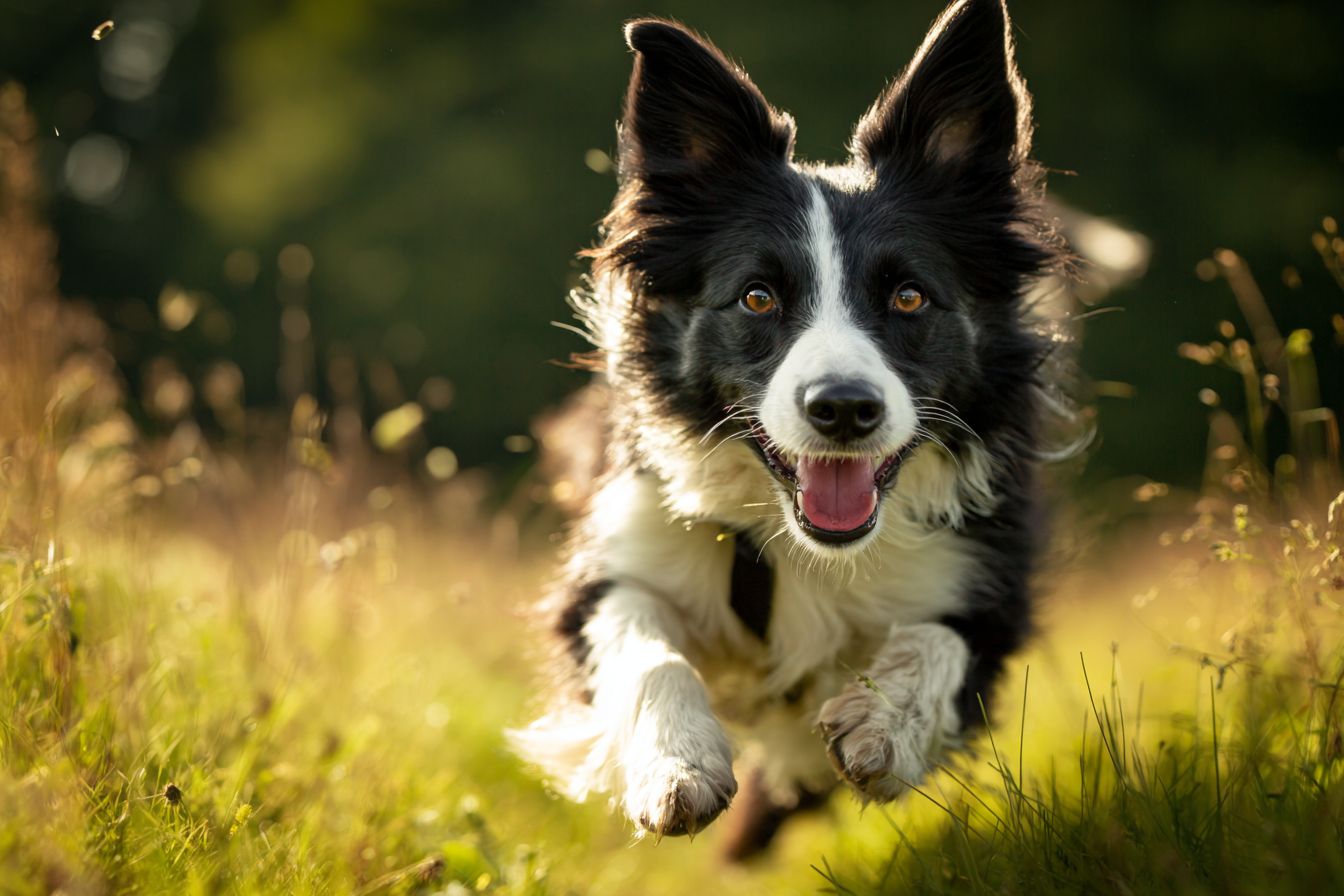
To make your stay command dog even more reliable, introduce a formal release word. This tells your dog the exercise is over and they are free to move. A common release word is “Okay!” or “Free!”
- Ask your dog to “Stay.”
- After a few seconds, say your release word in an excited, happy voice and encourage them to move toward you.
- This creates a clear start and end to the behaviour, preventing your dog from guessing when it’s time to get up.
Conclusion
Mastering how to train a puppy to sit and train a puppy to stay is one of the most rewarding experiences you can share with your dog. It’s more than just obedience; it’s a language. By breaking down the core dog commands into manageable steps and celebrating every small victory, you are building a bond of trust that will last a lifetime.
For the next step, try expanding your sessions into crate training with treats or explore positive potty training methods to round out your dog’s training routine.
Your well-behaved, attentive companion is waiting. Grab some treats, take a deep breath, and start your first session today. The results will be well worth the effort.
Need a personal trainer for your dog?
Find the best certified professionals in your area and start training today.