
How to Crate Train Your Puppy: A Gradual Introduction with Treats
TrainDogBuddy Team
Professional Dog Mentors
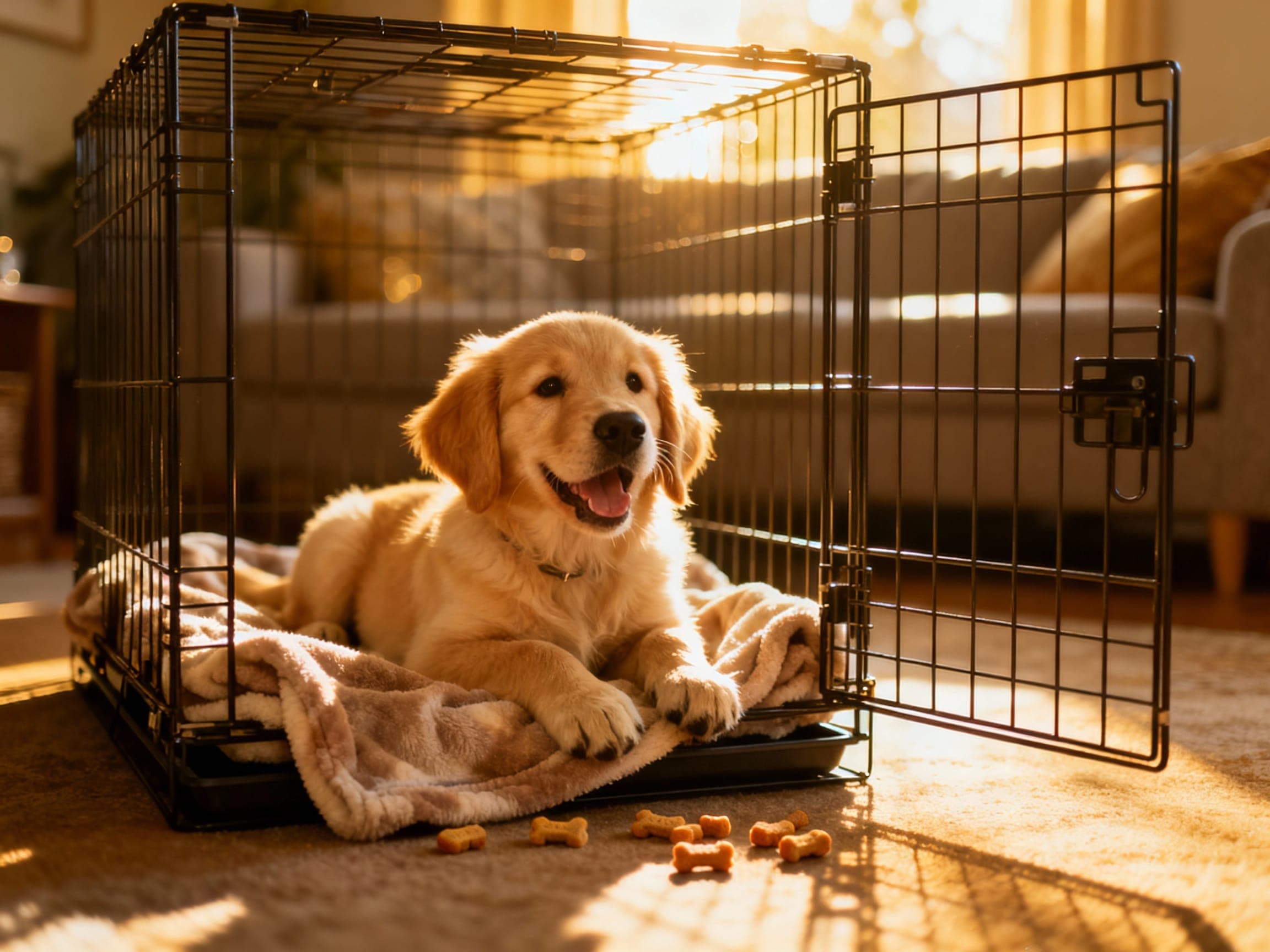
Bringing a new puppy home is a whirlwind of joy, cuddles, and… well, chewed slippers and potty accidents. As a new pet parent, you’re likely seeking a humane, effective way to guide your furry friend into becoming a well-adjusted family member. One of the most powerful tools at your disposal is the humble crate. When done correctly, crate training is not about confinement; it’s about providing your puppy with a sanctuary of their own a den that satisfies a deep-rooted canine instinct for a safe, secure space.
The psychology behind successful crate training is simple: we work with a dog’s natural instincts, not against them, as emphasized by Dr. Sophia Yin in her book “Perfect Puppy in 7 Days,” where she explains that crates leverage a puppy’s innate preference for cozy, den-like spaces to foster security and accelerate learning. In the wild, canines seek out small, enclosed dens to sleep, raise their young, and feel protected from threats. A properly introduced crate taps into this innate desire for a “safe room.” By using positive reinforcement primarily high-value treats and praise we associate the crate with everything wonderful. The crate becomes a place for delicious snacks, chews, and peaceful naps, never a place for punishment or isolation. This method builds trust, accelerates house training (as dogs naturally avoid soiling their sleeping area), and provides a crucial management tool for preventing mischief when you can’t supervise. It’s a foundational element of broader obedience training that benefits both you and your puppy, creating a harmonious home.
This guide will walk you through the gradual, treat-based process, ensuring your puppy learns to love their crate. If you’re starting from scratch, it can help to review how to crate train a puppy for the foundational steps before applying the treat-based method described here.
Tools You Will Need for Crate Training
Before you begin, gather these essential tools:
- The Crate: Choose one that is just large enough for your puppy to stand up, turn around, and lie down comfortably. If it’s too big, they might use one corner as a bathroom. Many crates come with dividers to adjust the size as your puppy grows.
- High-Value Treats: Have a special stash of tiny, soft, and incredibly delicious treats reserved only for crate training. Think small pieces of boiled chicken, hot dog, cheese, or commercial training treats.
- Comfortable Bedding: A soft, washable mat or blanket.
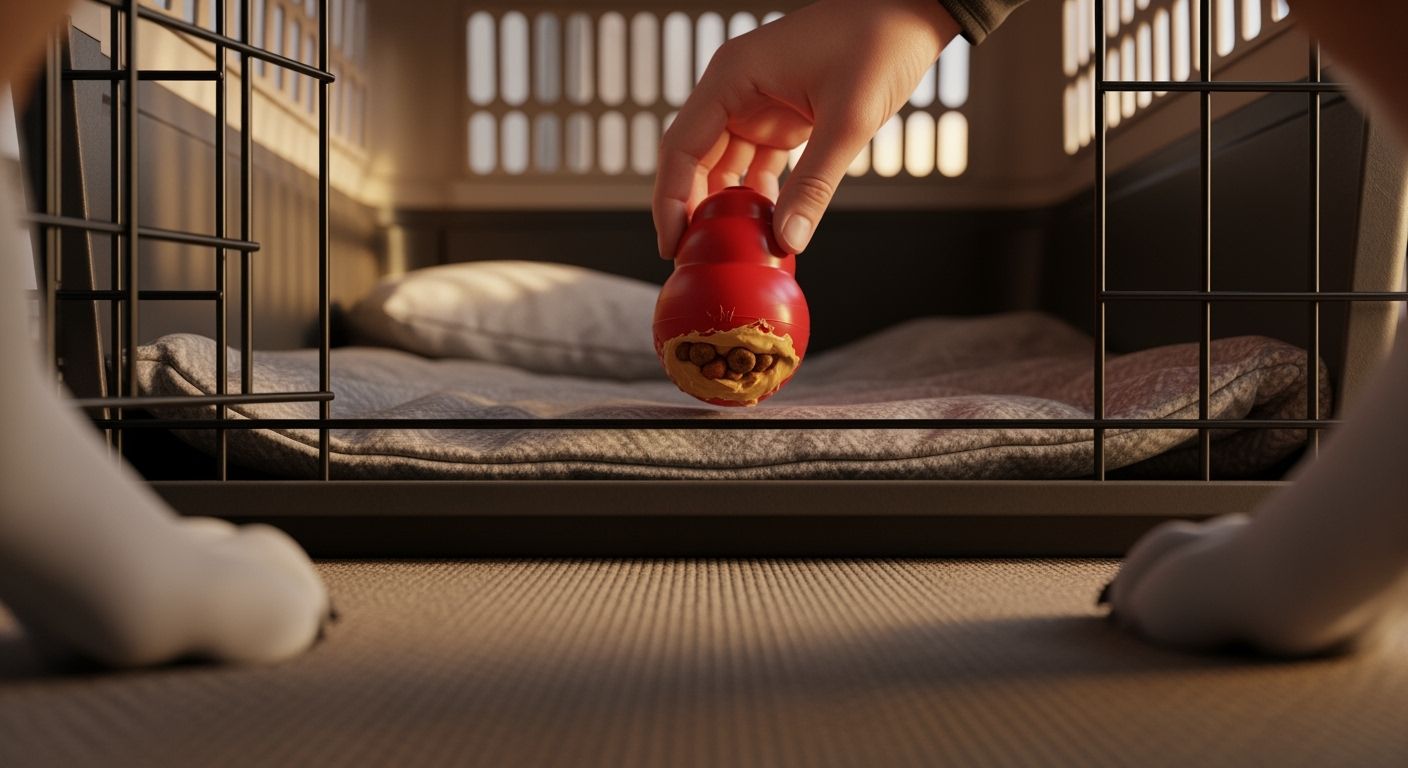
- Interactive Toys: Kong-type toys that you can stuff with treats, peanut butter (xylitol-free), or canned dog food are invaluable for creating positive associations.
- Patience and a Positive Attitude: This is the most important tool. Go at your puppy’s pace.
For extra guidance on using rewards effectively, check out crate training your puppy with treats it complements this gradual, positive approach perfectly.
The Step-by-Step Guide to Crate Training Your Puppy
Phase 1: Creating a Powerful Positive Association
The goal of this phase is simple: make the crate the best place on earth. Do not even think about closing the door yet.
- Let Them Explore: Place the crate in a common area like the living room with the door securely propped open. Let your puppy investigate it on their own terms. Ignore it completely. Any curiosity should be their idea.
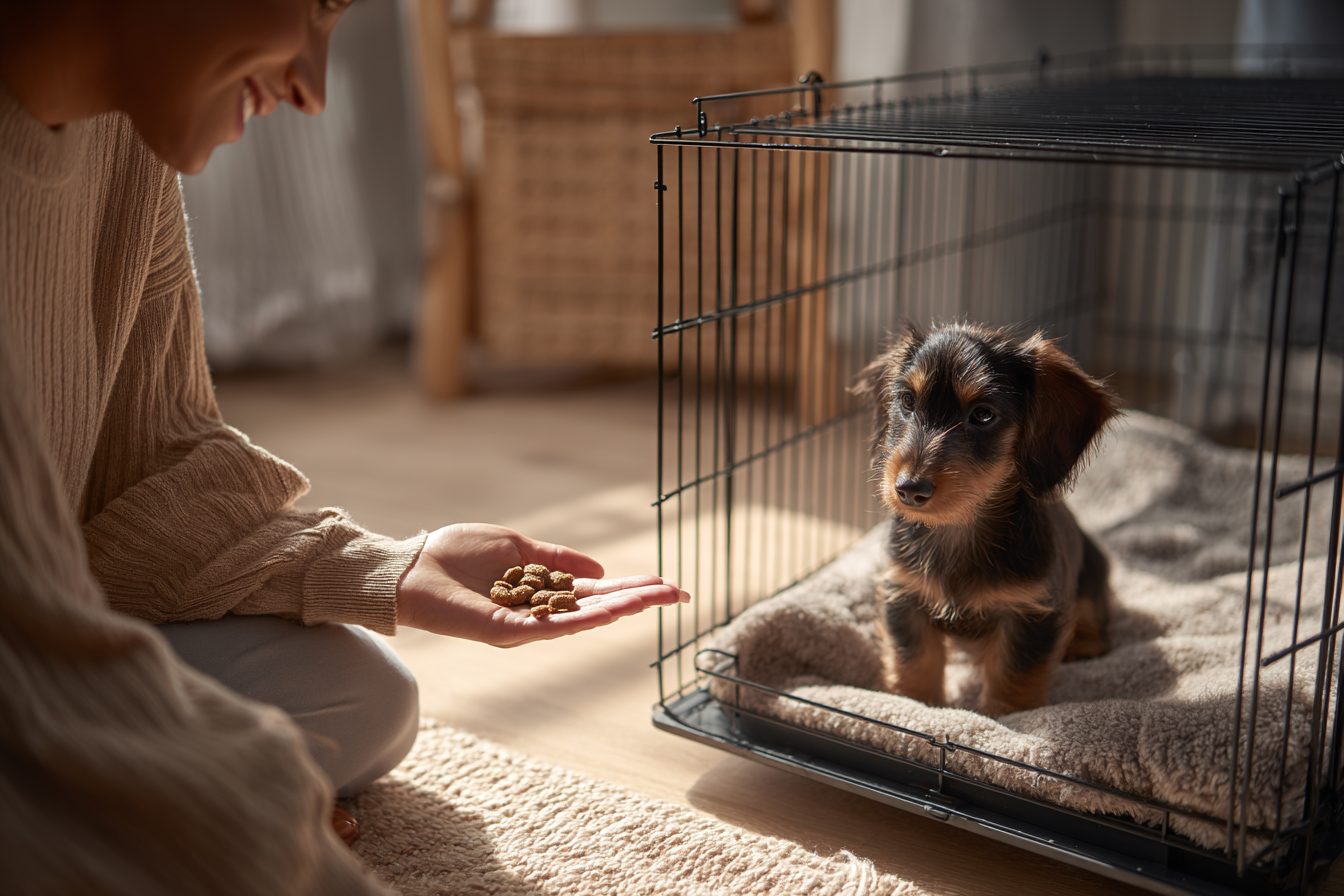
- The Treat Trail: casually toss a few high-value treats near the crate opening. Then toss a few just inside the doorway. Your puppy should freely go in and out to get them.
- The Treasure Hunt: Once your puppy is comfortably eating treats from the entrance, toss a treat deep inside the crate so they have to go all the way in to get it. Praise them calmly as they come out. Repeat this multiple times a day in short, 5-minute sessions.
- The Special Feeder: Once your puppy is entering the crate without hesitation, start feeding them their regular meals from a bowl placed at the very back of the crate. This builds a strong, positive routine.
Phase 2: Introducing the Door and Duration
Now that your puppy is happily running into the crate for treats, you can begin to introduce the concept of the door.
- The “Crate” Command: As your puppy moves into the crate for a treat, you can start saying a cue word like “Crate” or “Kennel” in a happy, upbeat tone just before they enter. They will begin to associate the action with the word.
- The Gentle Close: During a meal or while they’re busy with a stuffed Kong, sit by the crate and slowly close the door. Immediately pop a few extra-special treats through the top or side wires. Open the door again before they finish the Kong or before they start to look concerned. The door closing should predict more amazing things, not an end to the fun.
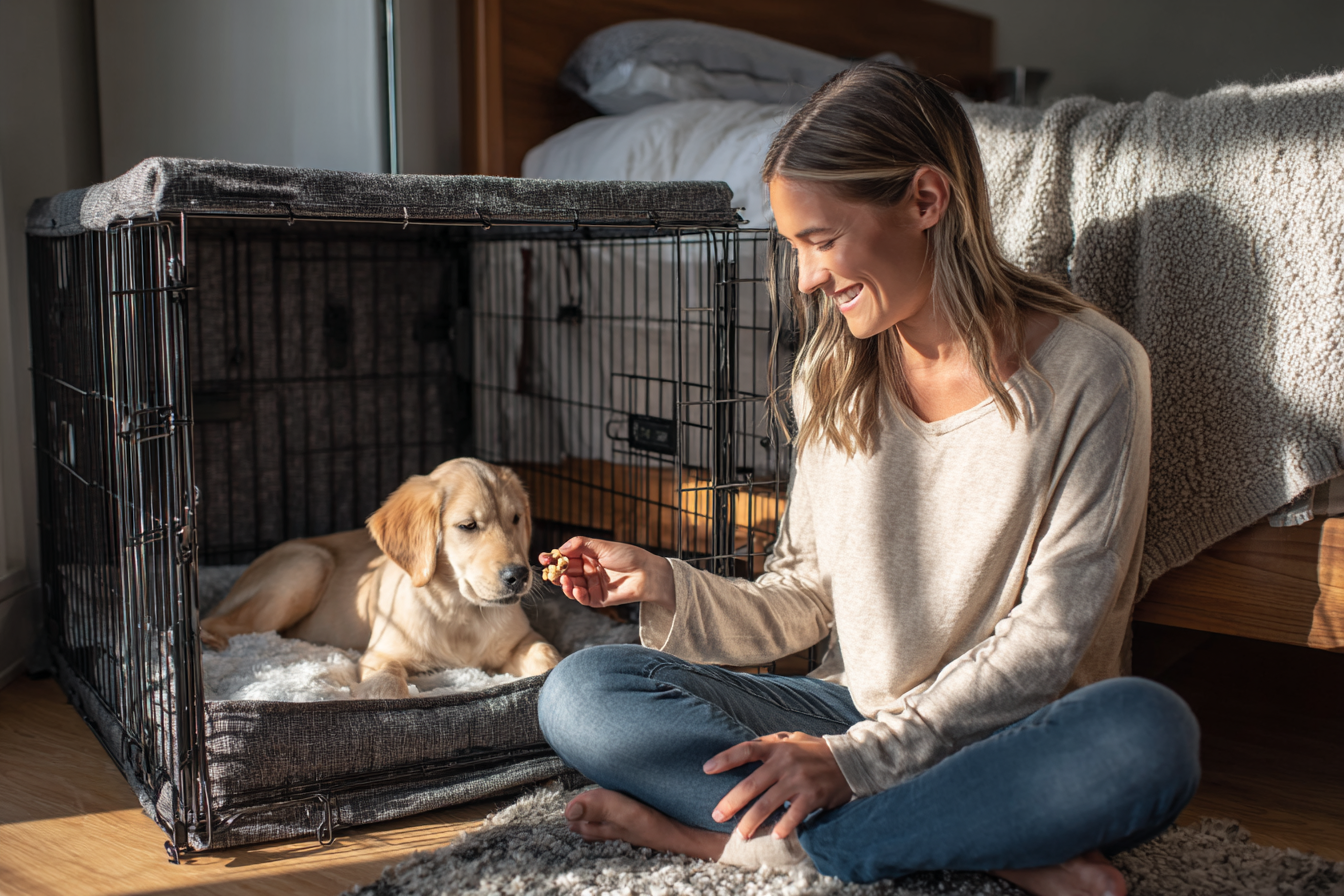
- Building Time Gradually: Repeat the step above, gradually increasing the time the door is closed by a few seconds at a time. Stay right next to the crate, talking to them softly and feeding treats through the wires. The key is to open the door before your puppy gets anxious. If they whine, you’ve moved too fast. Go back to a shorter duration.
Phase 3: Adding Distance and Absence
This phase teaches your puppy that good things happen in the crate even when you are not right next to it.
- Step Away: With your puppy settled in the crate with a chew toy and the door closed, stand up and take one step back. Immediately step forward and reward them for staying calm.
- Increase Distance Slowly: Over multiple sessions, increase the distance you move away and the time you are gone. Walk to the other side of the room and back, then reward. Step out of sight for a single second, then return and reward.
- Short Departures: Once your puppy can handle you being out of sight for 10-30 seconds, you can begin very short departures. Right before you leave the house, give them a stuffed Kong. Ask them to “kennel,” give them the toy, close the door, and leave quietly. Come back in after just 2-5 minutes. Do not make a big fuss when you return; simply let them out calmly once they are quiet.
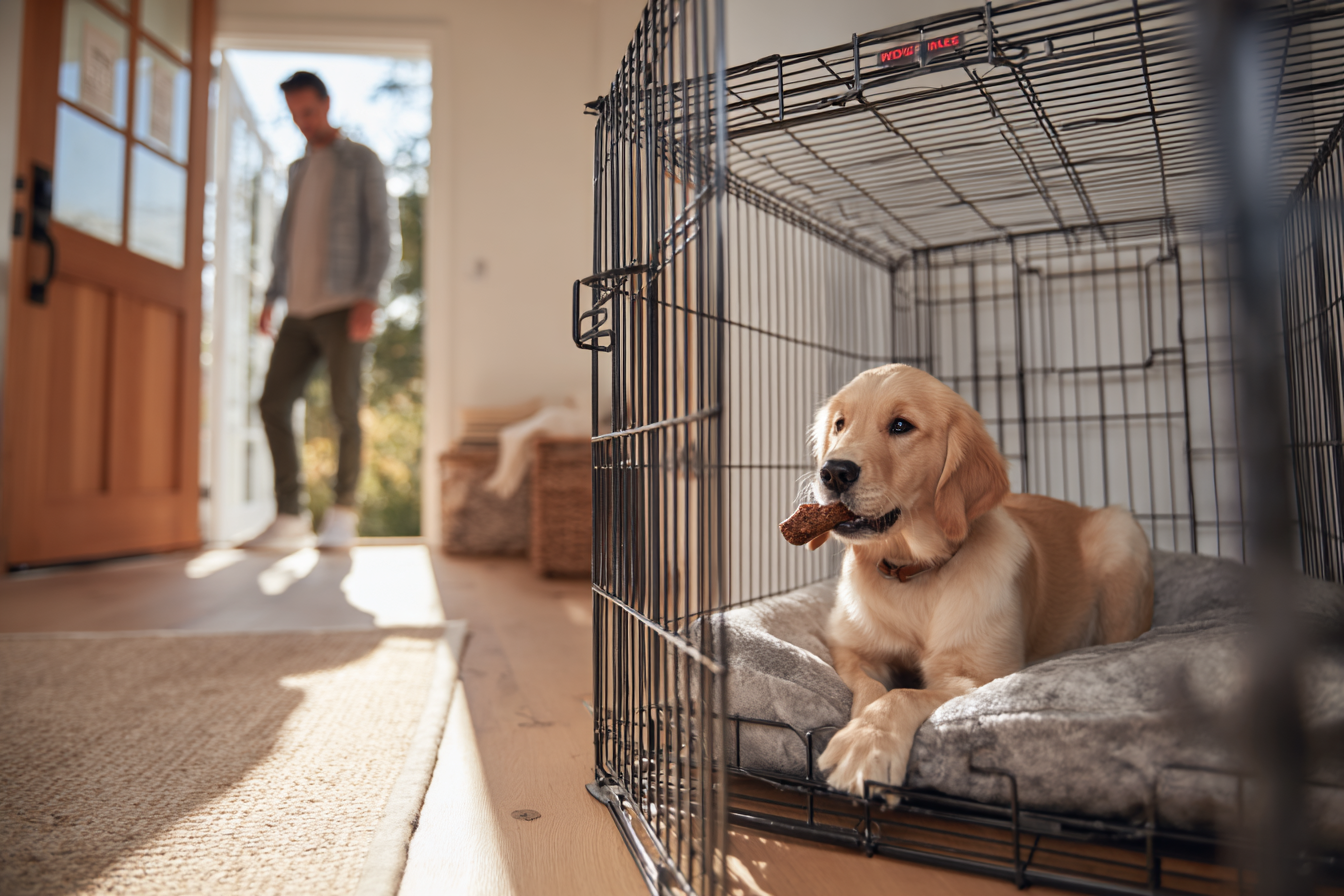
If your puppy struggles when you’re away or during nighttime, follow the structure in crate training at night and while you’re away to maintain consistency and reassurance.
Phase 4: Overnight Crate Training
This is often the biggest challenge, but the principles remain the same.
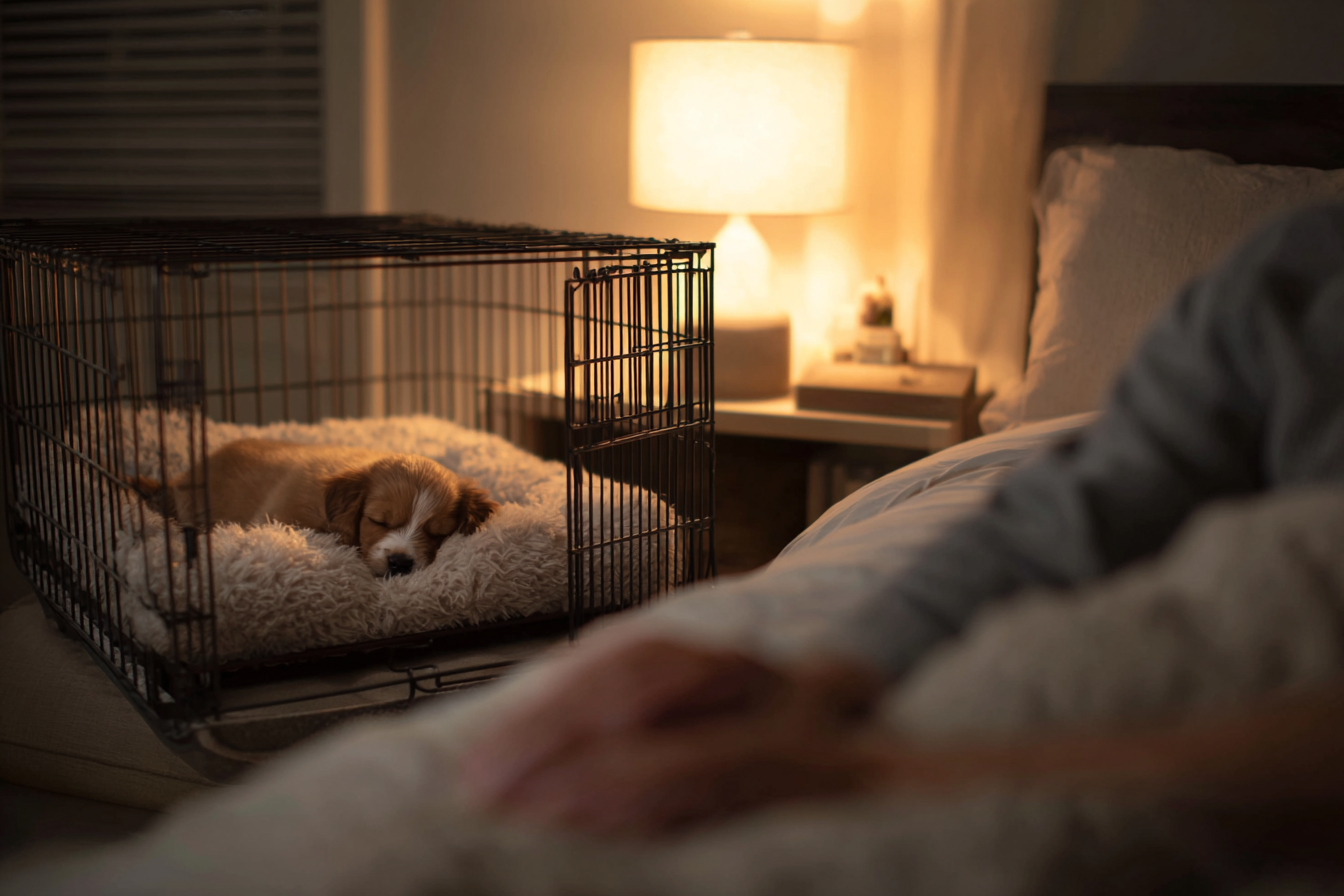
- Place the crate right next to your bed at night so your puppy can hear and smell you, which is reassuring.
- Use a command like “kennel” and give a small bedtime treat.
- Expect whining If it happens, assess the cause. Do they need a final potty break? If not, they are likely protesting. It’s crucial not to let them out while whining, as this teaches them that whining opens the door. A gentle shush or tapping on the crate can sometimes soothe them.
- Set an alarm for a middle-of-the-night potty break for young puppies, taking them directly outside and then back into the crate with a treat.
Troubleshooting Common Issues
- Whining or Barking: Ensure all needs are met (potty, water, exercise). If they are, ignore the behavior completely. Rewarding with attention or freedom teaches them that making noise works. Only open the door when they are quiet, even for a moment.
- Fear of the Crate: Go back to Phase 1. You may have moved too quickly. Make the treats even higher value and the steps even smaller.
- Soiling the Crate: This usually means the crate is too large, you’ve left them in for too long for their age and bladder control, or you may need to clean the crate with a proper enzymatic cleaner to remove all scent markers.
If you’re working on house manners alongside crate training, combining this with a comprehensive puppy potty training plan will make routines smoother and accidents less frequent.
Conclusion
Crate training your dog is an act of kindness. It provides them with a secure retreat during loud events (like thunderstorms or parties), a safe space for travel, and a management tool that prevents dangerous behaviors like chewing electrical cords when unsupervised. This process, rooted in patience and positive reinforcement, is a cornerstone of effective dog training. By using puppy training with treats and a gradual approach, you’re not just teaching a command; you’re building a bond of trust and mutual understanding. Remember, the goal is a dog who willingly and happily chooses their crate because it is their own cherished den.
Need a personal trainer for your dog?
Find the best certified professionals in your area and start training today.