
How to Crate Train Your Puppy: Train with a Den-like Environment
TrainDogBuddy Team
Professional Dog Mentors
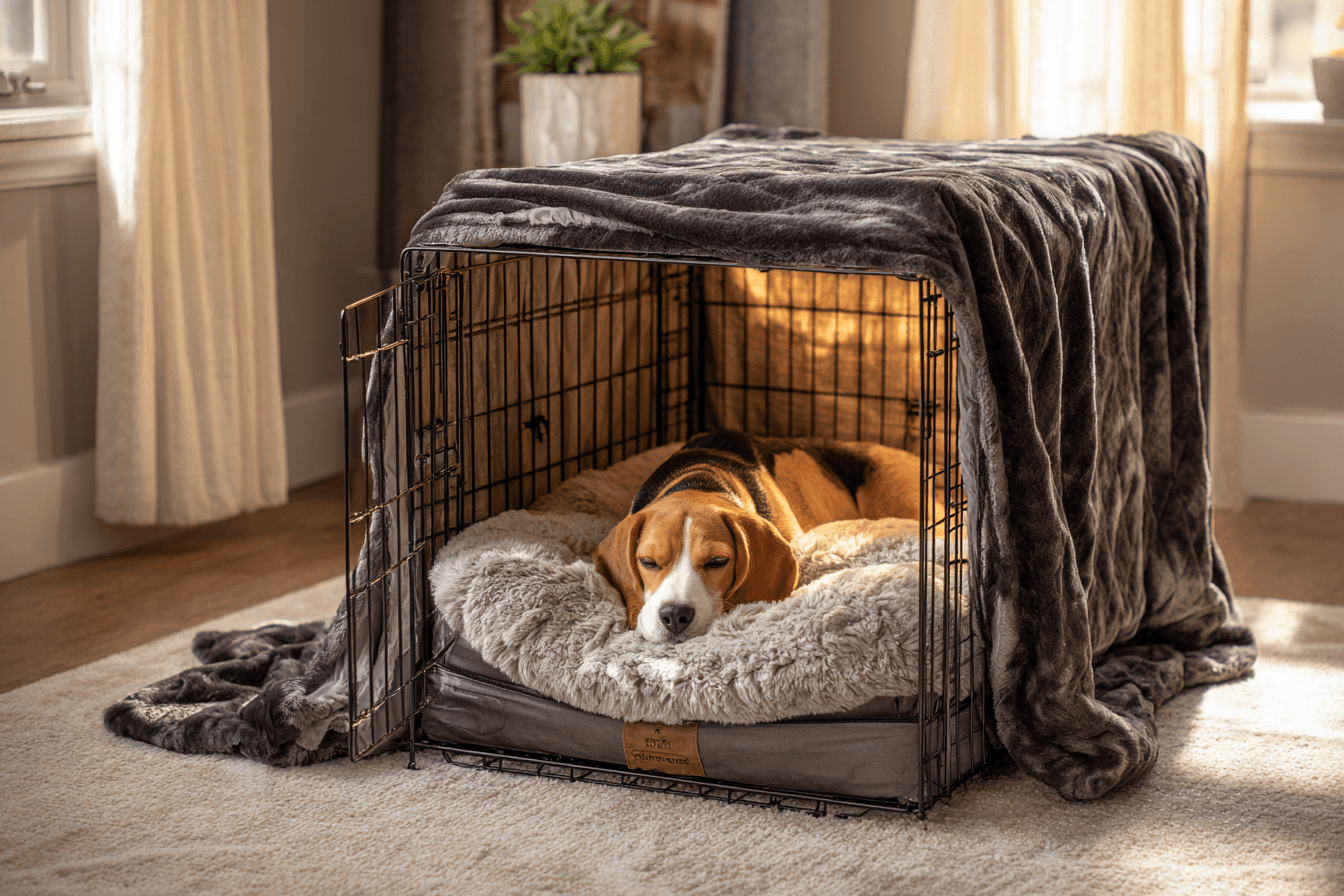
The sight of a new puppy often conjures images of playful chaos—tiny paws, wagging tails, and the inevitable challenge of teaching them the rules of their new home. In the midst of this adorable whirlwind, the concept of a crate can seem, to our human sensibilities, like a cage. But to a dog, when introduced correctly, it can become something profoundly different: a den. This shift in perspective from cage to den is the fundamental secret to successful and humane crate training.
The importance of crate training extends far beyond simply containing your puppy, as renowned trainer Zak George highlights in his book “Zak George’s Dog Training Revolution,” where he describes crates as a tool to honor a dog’s innate denning instincts, turning them into a positive, secure haven rather than a punishment. For the owner, it provides a safe, secure way to manage a young dog when unsupervised, preventing destructive chewing, aiding in potty training, and offering a calm retreat for the puppy during busy household events. For the puppy, the benefits are even more profound. Canines are, by nature, denning animals. In the wild, a den is a secure, enclosed space that offers protection from the elements and predators, a place to rest and raise young without constant vigilance. This instinct is hardwired into our domestic dogs. A properly configured crate taps directly into this deep-seated psychological need for a safe harbor. It becomes their personal bedroom, a quiet corner in a sometimes-overstimulating world where they can decompress and feel truly secure. This method of crate training the puppy isn’t about force; it’s about fulfilling an instinct. By creating this den-like environment, you are not confining your dog; you are providing them with a gift of security that is the cornerstone of a confident, well-adjusted companion. This process is a critical component of foundational obedience training and overall dog training, fostering a relationship built on trust rather than coercion.
If you’re just starting your crate training journey, you can first review how to crate train a puppy for setup basics and foundational steps before creating this den-like atmosphere.
The Foundation: Crafting the Perfect Den
Before a single treat is offered, the stage must be set. The physical setup of the crate is paramount to triggering the den instinct.
Tools You Will Need:
- The Right Crate: Select a crate that is just large enough for your puppy to stand up, turn around, and lie down comfortably. A crate that is too large loses its den-like feeling and, crucially, allows a puppy to soil one corner and sleep in another, undermining house training. Wire crates with dividers are ideal as they grow with your puppy.
- The Right Bedding: A soft, washable mat or blanket is essential. It should be comfortable but also retain your puppy’s scent, which reinforces the feeling of a familiar, personal space.
- Covering for Security: A crate cover, a blanket, or a large towel is critical for creating a den-like atmosphere. Covering the top and three sides of a wire crate mimics the enclosed feeling of a natural den, reducing visual stimulation and creating a cozier, more secure environment.
- High-Value Treats and Toys: Have a stash of special, soft treats reserved only for crate training. A stuffable toy like a Kong is invaluable for creating powerful positive associations.
For a deeper dive into designing a cozy, den-style setup that encourages calm behavior, you can also read crate training your puppy for a den environment it complements this guide perfectly.
The Step-by-Step Guide to Building a Positive Den Association
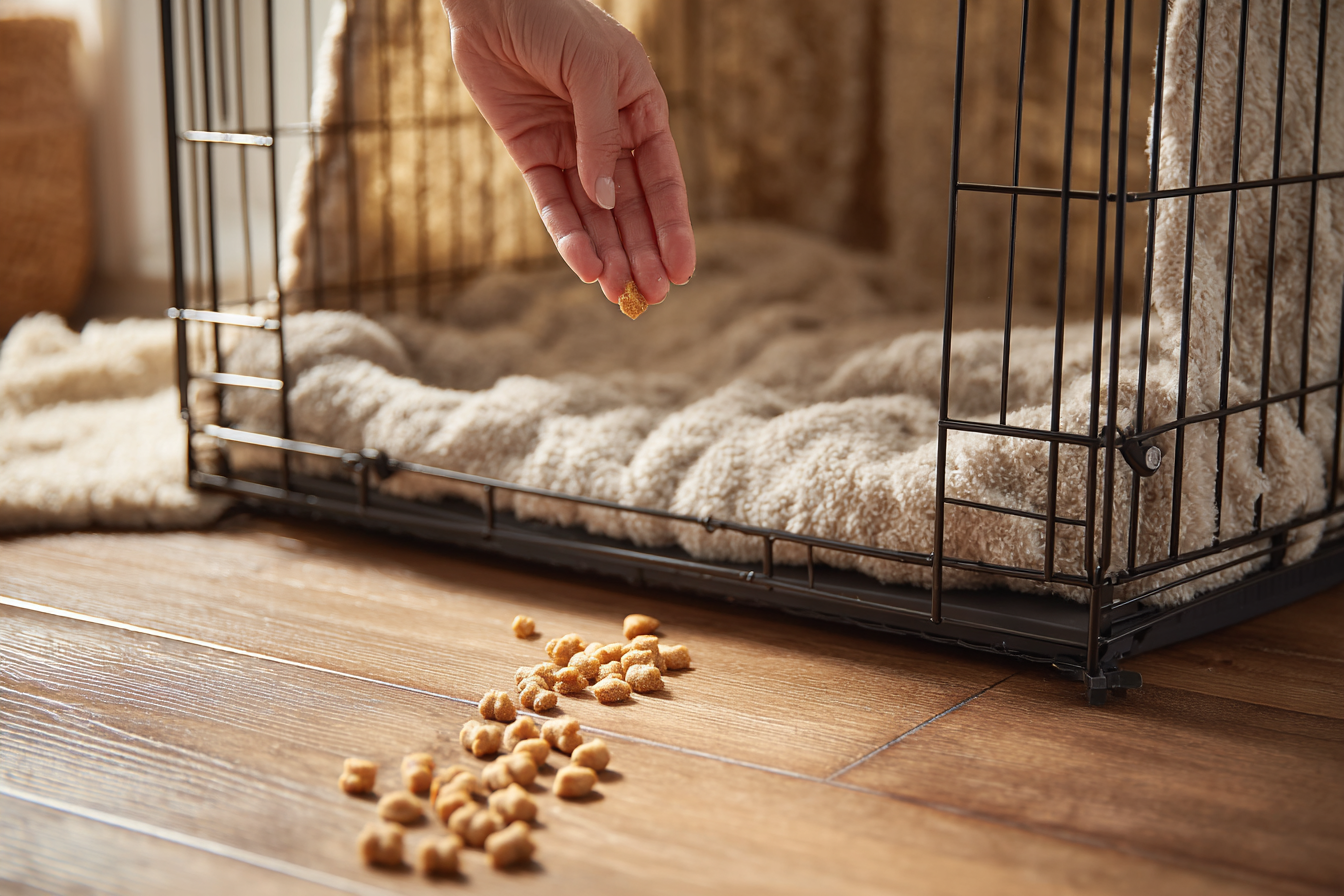
The goal is to have your puppy view the crate as their cherished sanctuary. Every interaction must be voluntary and positive.
Phase 1: The Irresistible Introduction
Strategic Placement: Position the covered crate in a quiet but social part of your home, like a corner of the living room not in a isolated hallway. Your puppy will want to be near their “pack,” but also have a sense of privacy.
- The Open-Door Policy: Secure the door fully open. Allow your puppy to investigate the crate on their own terms. Do not coax or force them. Let curiosity be their guide.
- The Treasure Den: Casually toss incredibly high-value treats (small pieces of chicken, cheese, etc.) near the entrance, then just inside the doorway. Let them go in and out freely. The action should be entirely their choice.
- The Special Den Feeder: Once your puppy is entering without hesitation, start placing their regular food bowl all the way at the back of the crate during mealtimes. This builds a powerful, routine-based positive association.
Phase 2: Mastering the Door and Building Comfort
This phase introduces the concept of the closed door, but in a way that continues to build positive feelings.
- The “Crate” Cue: As your puppy walks into the crate for a treat, say a calm, happy cue word like “Crate” or “Kennel.” They will learn to associate the word with the action and the positive outcome.
- The Calm Close: While your puppy is inside enjoying a stuffed Kong or a meal, sit quietly nearby and slowly close the door. As you do this, gently praise them and slip a few extra-special treats through the wires. After a few seconds, open the door before they finish their treat or show any sign of concern. The door closing must predict more good things.
- Increasing Duration Gradually: Repeat this process, slowly increasing the time the door is closed by a few seconds at a time. Remain seated right next to the crate, talking softly and feeding treats intermittently. The key is to always open the door before your puppy becomes anxious.
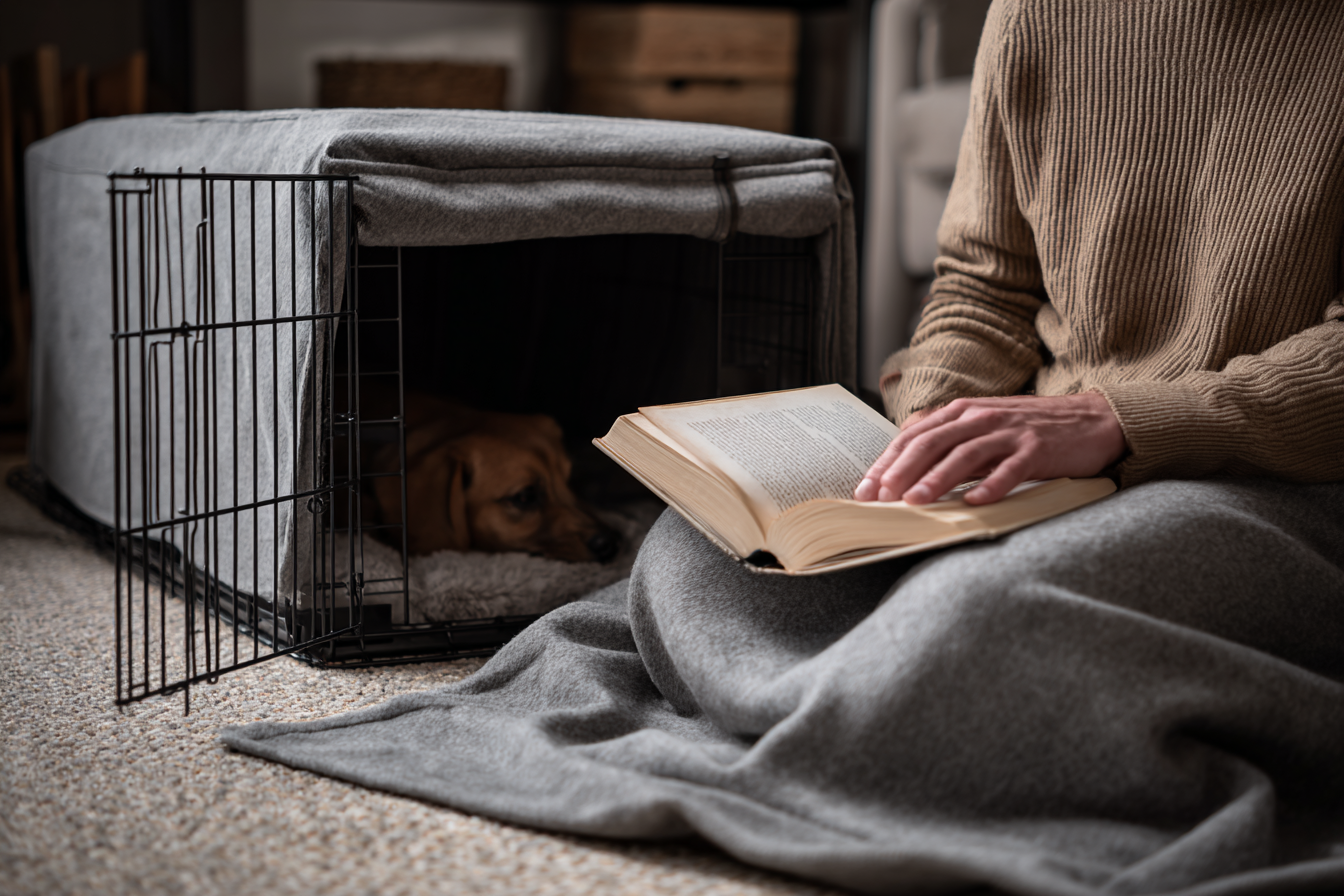
Phase 3: Solidifying the Den as a Place of Calm
Now, we teach the puppy that their den is a place for rest and relaxation, even when you are not right beside them.
- Creating Distance: With your puppy settled in their crate, stand up and take one step back. Immediately return, reward them for calm behavior, and then release them. Gradually increase the distance and time you are away over multiple sessions.
- Brief Absences: Begin with very short departures. Give your puppy a stuffed Kong, ask them to “crate,” close the door, and leave the room quietly. Return after just 30 seconds to a minute initially. Do not make a dramatic entrance; be calm and neutral.
- Overnight Success: Place the crate right next to your bed at night. The proximity to you is reassuring. Use a command, give a small bedtime treat, and settle in. If your puppy whines, ensure they don’t need a potty break. If not, a quiet shush or your calming presence is often enough to settle them. Never let them out while whining, as this teaches them that whining works.
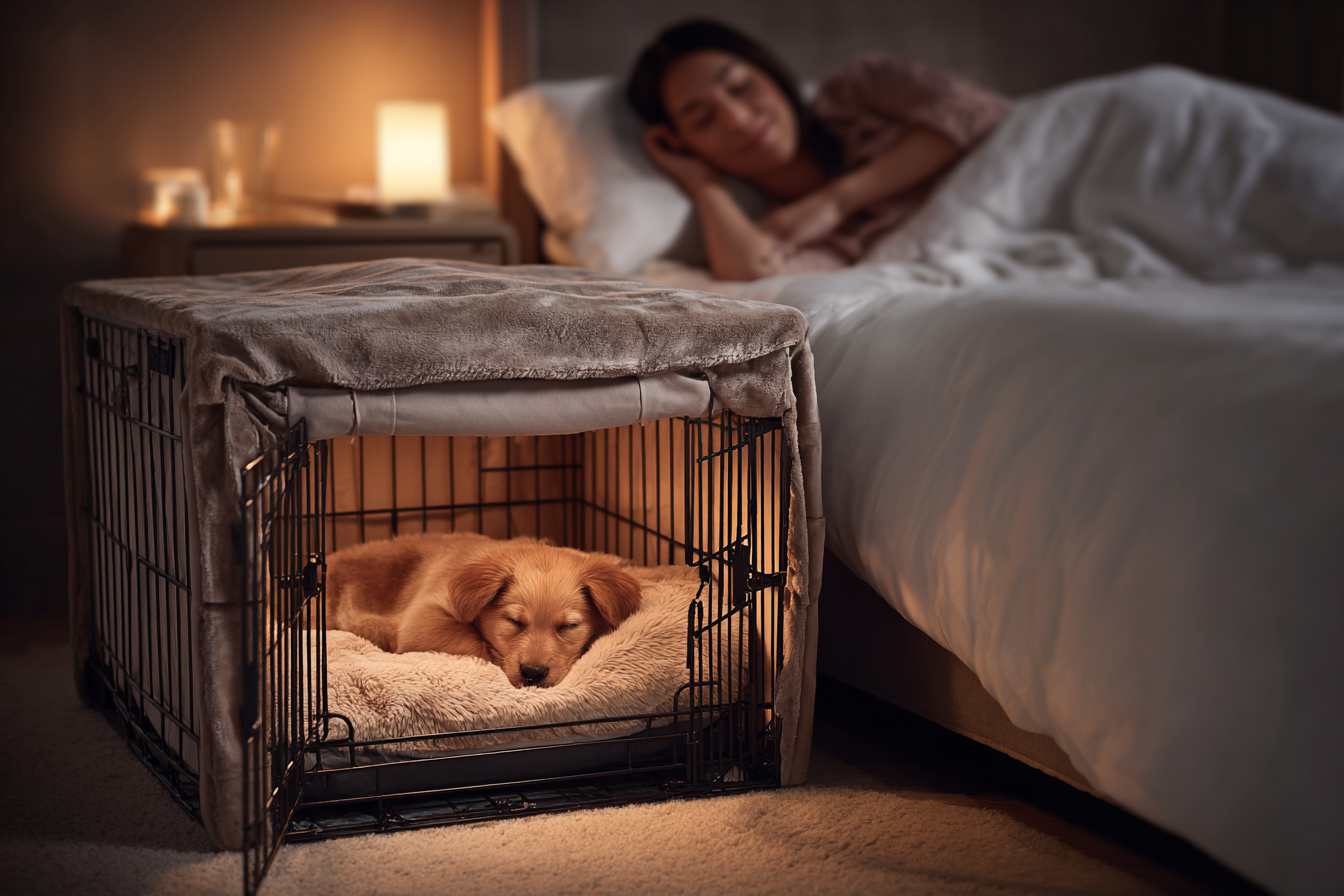
If you’re practicing crate time during nights or short absences, this routine aligns well with crate training at night and while you’re away for building comfort during quiet hours.
Troubleshooting: Preserving the Sanctity of the Den
- Whining or Barking: First, rule out a need for a potty break or water. If all needs are met, the behavior is likely attention-seeking. Do not acknowledge it. Any attention, even scolding, is a reward. Wait for a moment of quiet before opening the door.
- Fear or Reluctance: You have moved too quickly. Go back to Phase 1 and rebuild the positive association with even higher-value rewards. Never physically push your puppy into the crate.
- Soiling the Den: This is a sign that the crate may be too large (use the divider), the puppy is being left for too long, or they need a more frequent potty break schedule. A true den is the last place a dog wants to soil.
For a full potty training plan that complements crate routines, see this comprehensive guide to potty training it integrates perfectly with crate-based house training.
Conclusion:
Mastering how to crate train your puppy by creating a den-like environment is one of the greatest gifts you can give your dog. It provides them with a predictable, safe space that reduces anxiety, aids in house training, and prevents problem behaviors. This method of crate training with a den-like environment respects the innate psychology of your canine companion, building a bond of trust and understanding. When your puppy voluntarily retreats to their crate for a nap, you’ll know you have successfully provided them with more than a piece of furniture—you’ve given them a sanctuary they can call their own.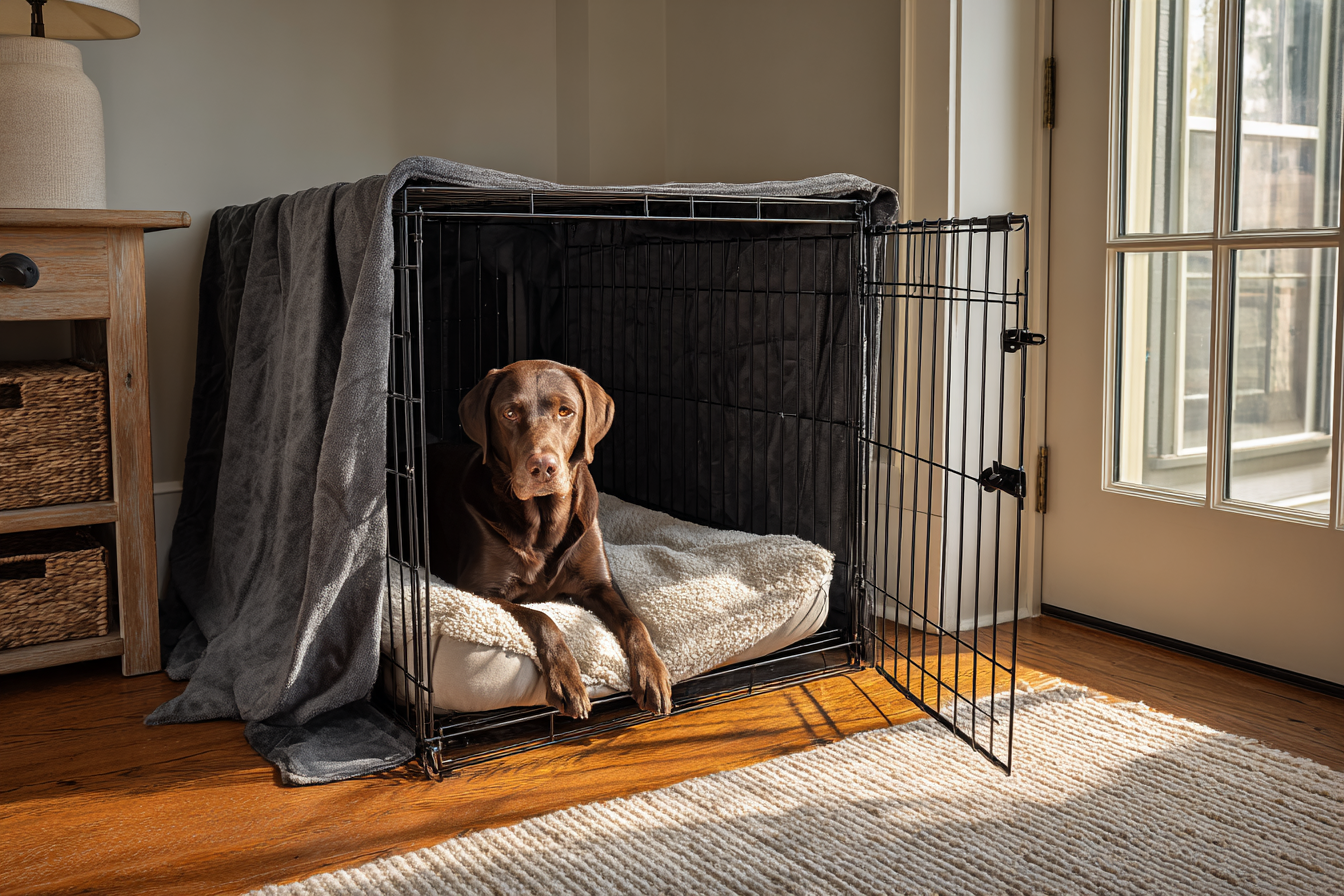
Need a personal trainer for your dog?
Find the best certified professionals in your area and start training today.