


The “sit” command is more than just a party trick; it’s a foundational behavior for a well-mannered pet, often serving as the very first lesson in communication. Its value lies in providing a simple, controllable action for your dog in exciting or potentially unsafe situations.
For beginners, it’s also a perfect first step before progressing to sit and stay training — a key combo in obedience.
For a puppy, learning to sit is the gateway to cooperation, a concept popularized by trainer Zak George, who emphasizes turning training into an engaging game to build a dog’s enthusiasm and willingness to learn. This method relies on positive reinforcement which isn’t about bribing your dog but about clearly communicating and rewarding desired behaviors.
As celebrated trainer Victoria Stilwell advocates, this “force-free” approach builds trust and strengthens your bond, creating a partnership rather than a dynamic of control. The answer to “how can I make my dog obedient?” starts here, with patience, consistency, and a pocketful of treats, laying the groundwork for a happy and well-trained companion.
Tools You Will Need
The beauty of training “sit” is its simplicity. You only need a few things:
- High-Value Treats: Small, soft, and smelly treats your dog loves. Pieces of hot dog, cheese, or commercial training treats are perfect.
- A Quiet Environment: Start in a place with few distractions, like your living room.
- Patience and a Positive Attitude: Keep sessions short (5 minutes or less) and always end on a positive note.
If you’re also teaching crate manners, pairing this with crate training using treats builds consistency across different skills.
Method 1: The Luring Technique (Easiest for Beginners)
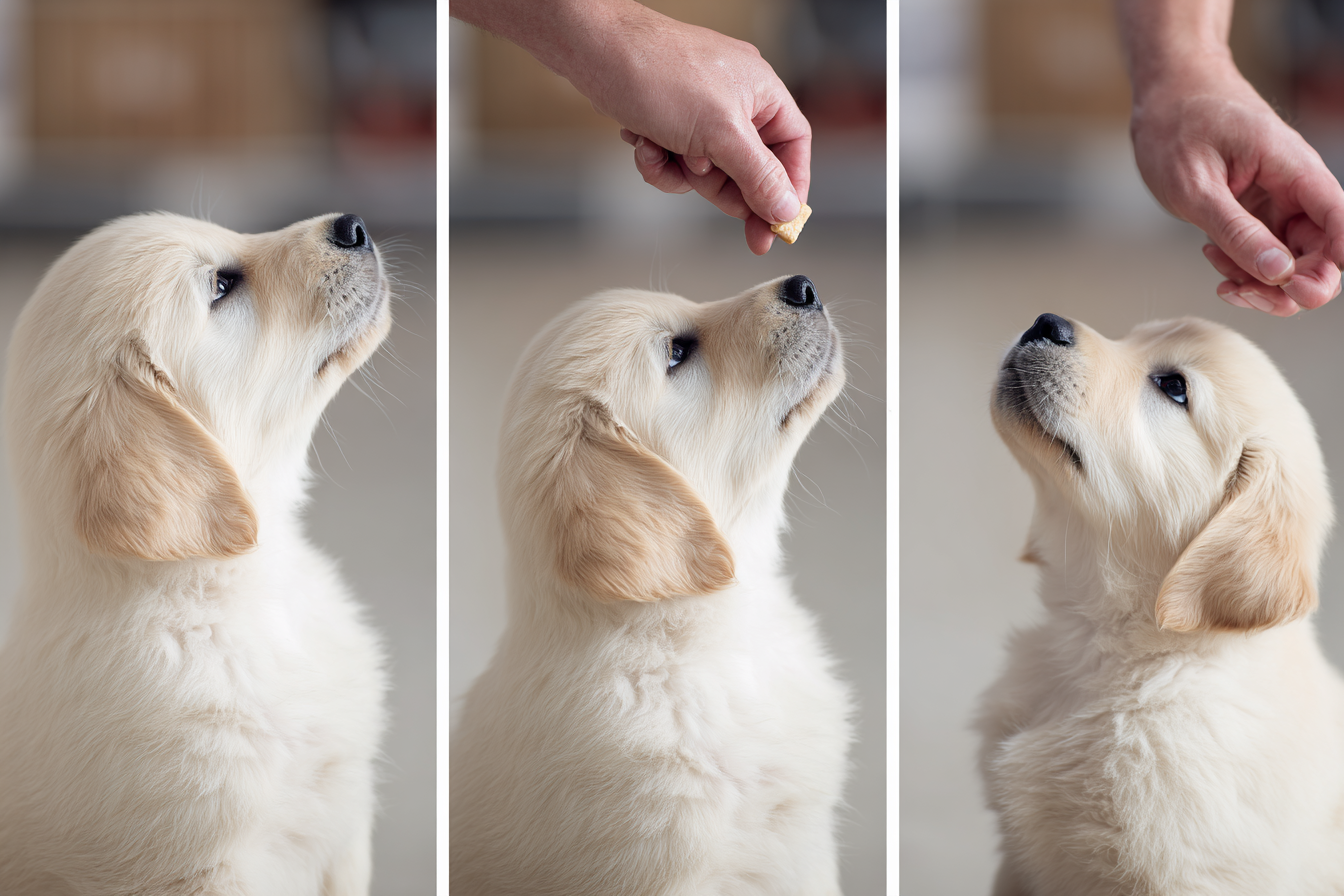
This is the most common and effective method for teaching “sit” for the first time. It guides your dog into the correct position using a treat as a lure.
Step 1: Get Your Dog’s Attention
Hold a treat in your hand and let your dog sniff it. This ensures you have their full focus.
Step 2: The Guided Movement
Slowly move the treat from the front of your dog’s nose up and over their head, towards their tail. Keep the treat close to their nose—if you lift it too high, they might jump. As their head follows the treat up and back, their bottom will naturally lower to the ground.
Step 3: Mark and Reward the “Sit”
As soon as your dog’s hindquarters hit the floor, mark with “Yes!” or a click. If you use a clicker, see this quick guide on clicker training to improve timing and accuracy.
Step 4: Release and Reset
After rewarding, say “Okay!” in a cheerful tone to let your dog know the behavior is complete and they can get up. Take a step back to encourage them to stand, ready to start again.
Step 5: Adding the Verbal Cue
Once your dog is reliably following the lure into a sit (after 10-15 successful repetitions), you can begin to add the verbal command. Just before you start to move the lure, say “Sit.” Continue to lure them into position and reward. This helps them associate the word with the action.
Step 6: Fading the Lure
After several sessions where your dog sits reliably with the verbal cue and the lure, start to make the lure less obvious. Use an empty hand to make the same motion, but have the treat hidden in your other hand. The moment they sit, reward them from your other hand. Soon, your dog will respond to the hand signal and verbal cue alone.
Method 2: The Capturing Technique (For the Thinker)
This method rewards your dog for offering the behavior on their own, which can build problem-solving skills and confidence.
Step 1: Observe and Wait
Simply have your treats ready and watch your dog. Dogs sit naturally many times throughout the day.
Step 2: Mark and Reward
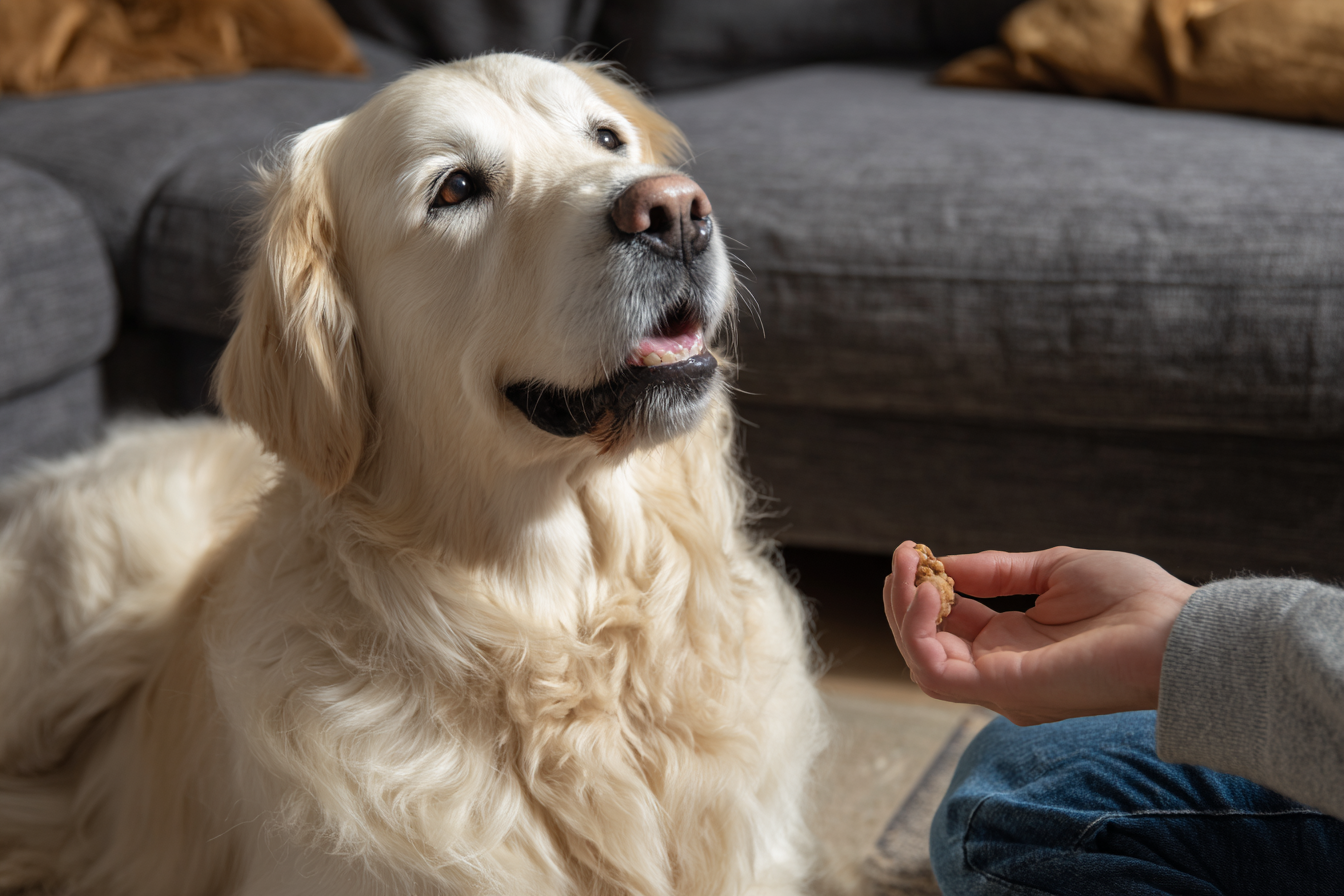
The very instant you see your dog’s bottom hit the floor for any reason, mark it with a loud, happy “Yes!” and toss them a treat. Because you rewarded the sit, they will likely stand up to get the treat.
Step 3: Repeat and Add the Cue
As they begin to predict the reward, say “Sit” right before they do it.
If your puppy’s focus wanders, introducing crate training as a calm space between sessions helps them relax and reset.
Troubleshooting Common Issues
- My Dog Jumps Instead of Sits: This means you are holding the lure too high. Keep it closer to their nose and move it more slowly directly back over their head, not up.
- My Dog Backs Up Instead of Sits: Practice in a corner or against a wall. This physically prevents them from backing up and encourages them to bend their hind legs.
- My Dog Isn’t Food Motivated: Find a higher-value treat, like small pieces of real meat. You can also use their favorite toy or a short play session as a reward instead of food.
For puppies who struggle with attention, structured short sessions and knowing when to start obedience training make a big difference in progress and patience.
Taking It to the Next Level: Proofing the Behavior
Once your dog has mastered “sit” in a quiet room, it’s time to “proof” the command, making it reliable anywhere.
- Add Duration: Ask your dog to “sit,” but wait a second or two before saying “Yes!” and giving the treat. Gradually increase the time they must remain seated before the reward comes.
- Add Distance: Ask your dog to “sit,” then take one small step back. If they hold the position, step forward and reward. Slowly increase the number of steps you take away.
- Add Distractions: Practice in different rooms, then in your yard, and then on quiet walks. Start with mild distractions (e.g., a TV on) and build up to more challenging ones (e.g., another person in the room).
When you’re ready to move beyond the basics, combine “sit” with gentle restraint cues or even potty habits using this comprehensive potty training guide for smoother daily routines.
Conclusion:
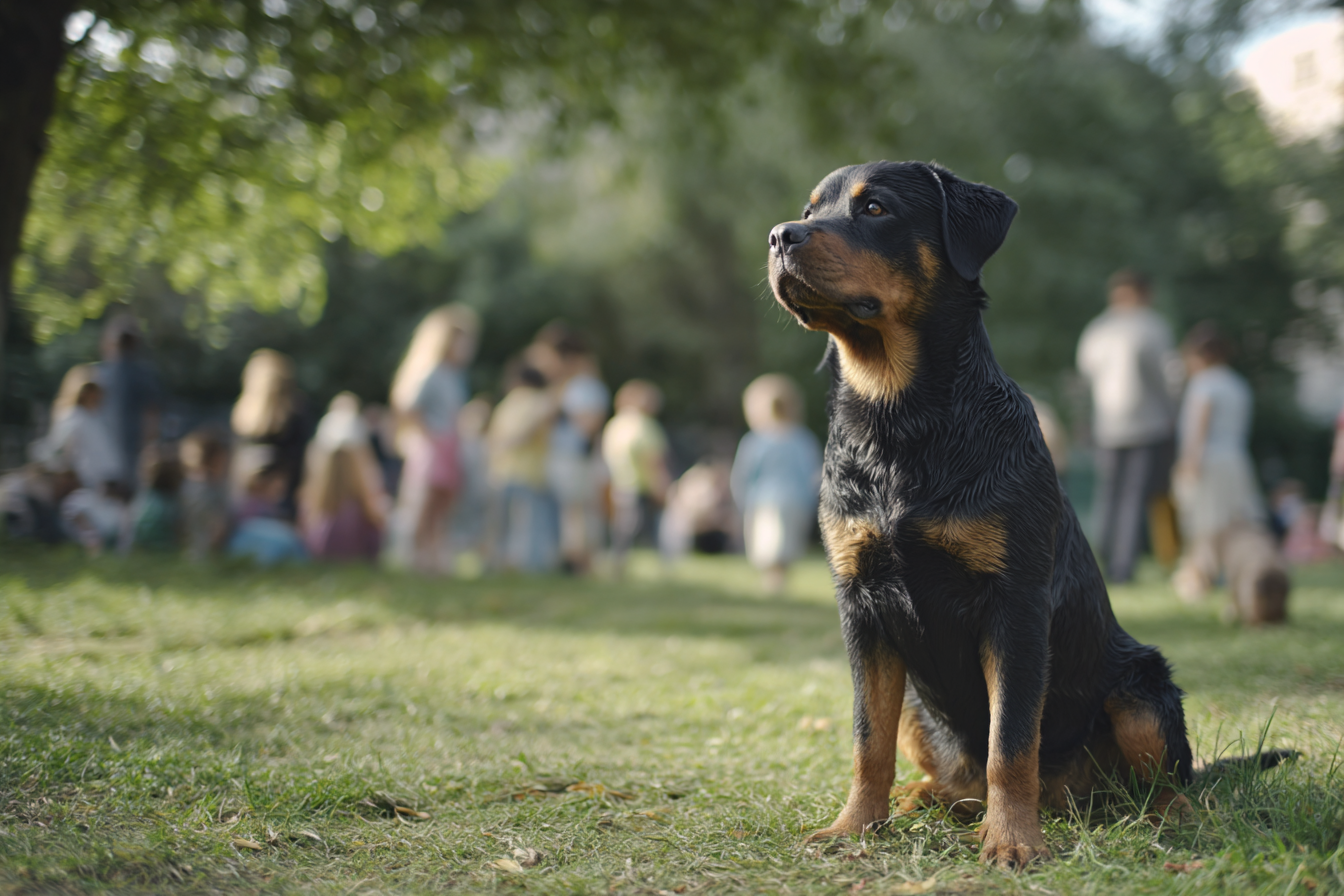
Mastering how to train your puppy to sit is the first and most critical step in your obedience training journey. It teaches your dog to look to you for guidance and establishes a language of cooperation. This simple command is the key to curbing jumping, calming excitement, and ensuring safety. By using positive, reward-based methods, you are not just teaching a command; you are building a relationship of mutual understanding and respect. This is the true secret to how you can make your puppy obedient and build a lifelong bond with your furry friend.