



Crate training is a cornerstone of raising a well-adjusted puppy, offering a safe, den-like space that supports house training, prevents destructive behaviors, and provides security. When approached with positive reinforcement a philosophy championed by trainers like Dr. Ian Dunbar—it fosters trust rather than fear.
The following three methods gradual introduction with treats, creating a den-like environment, and clicker training for crate acceptance offer gentle, reward-based approaches. The clicker method, inspired by Karen Pryor’s work, is especially effective for shaping positive crate habits through precise feedback.
Method 1: Gradual Introduction with Treats
This method focuses on building a positive association with the crate through treats and gradual exposure, making it ideal for puppies new to crating or those needing a gentle introduction.
If you’re starting fresh, this pairs perfectly with crate training your puppy with treats a step-by-step guide that complements this gradual approach.
Steps
1. Set Up the Crate:
- Size and Type: Choose a crate (wire or plastic) just large enough for the puppy to stand, turn around, and lie down comfortably. For growing puppies, use a divider to adjust the space.
- Location: Place the crate in a quiet, family-oriented area, such as a living room corner, to avoid isolation while minimizing distractions.
- Comfort: Add a soft blanket or towel to make the crate inviting. Avoid thick bedding that could be chewed or soiled.
2. Introduce the Crate:
- Open Door: Leave the crate door open to allow free exploration.
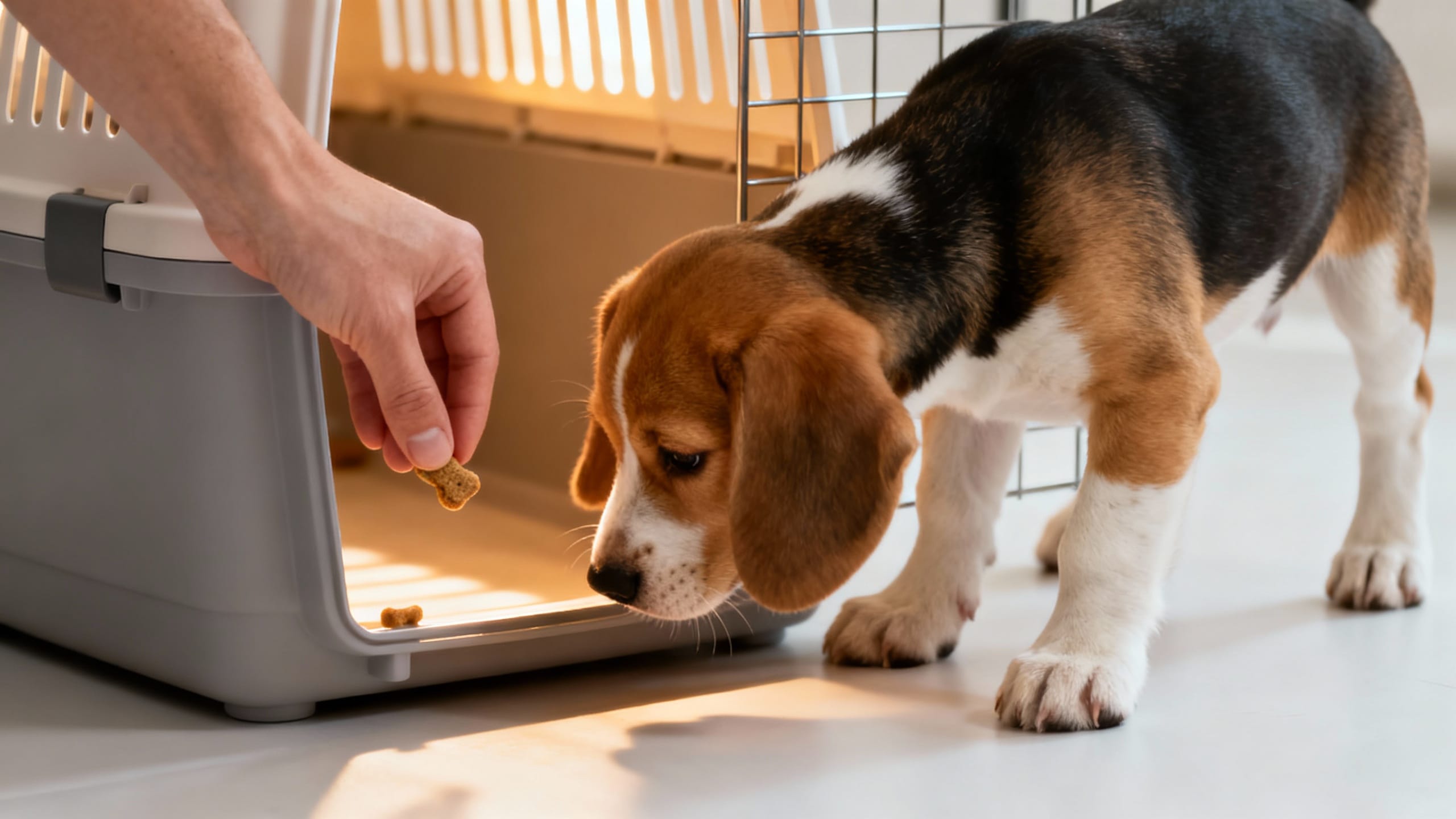
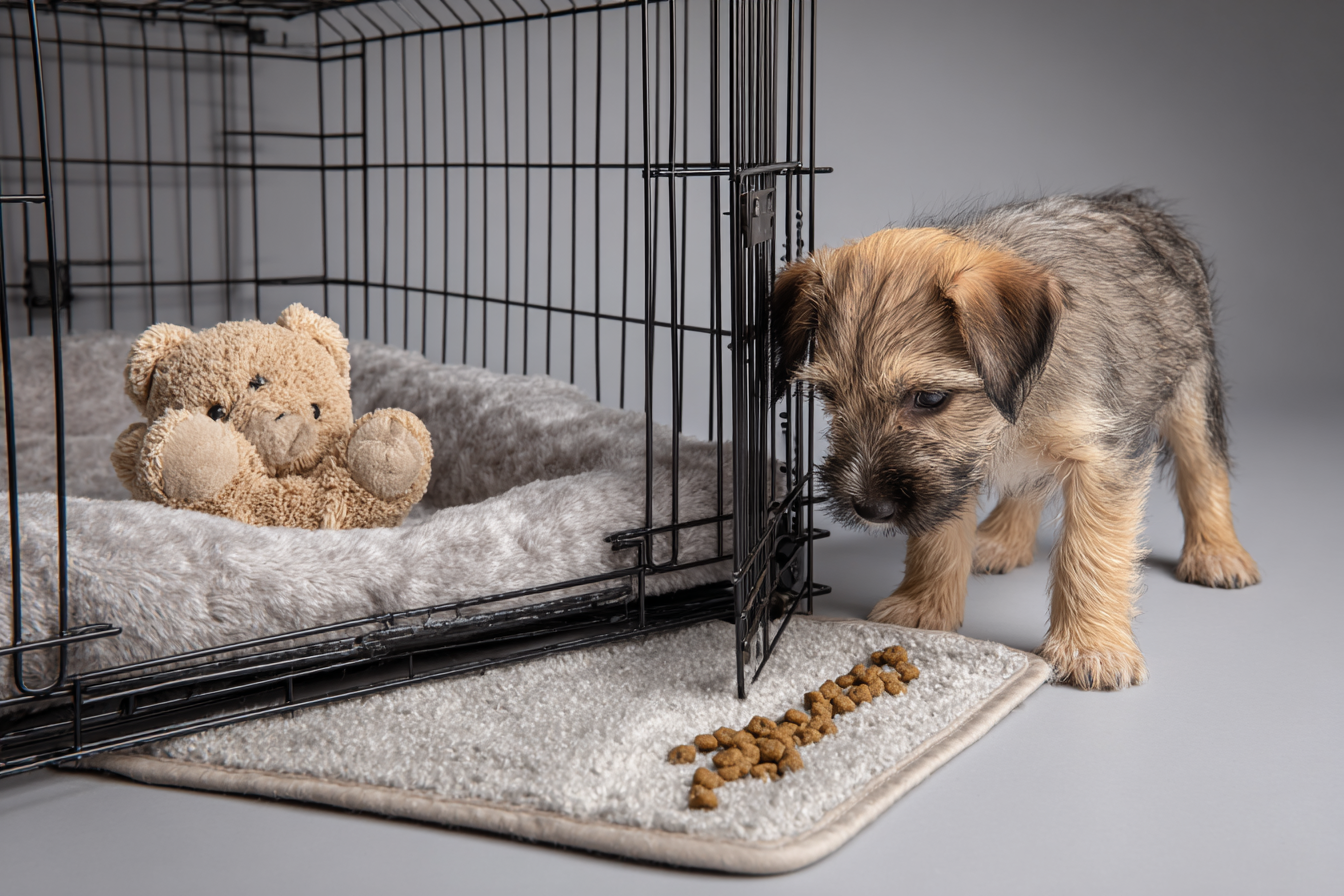
- Treat Luring: Toss high-value treats (e.g., small pieces of chicken) near the crate entrance, then just inside, to encourage the puppy to approach and enter.
- Praise: Offer enthusiastic praise (e.g., “Good puppy!”) when the puppy sniffs or steps inside, even briefly, to reinforce curiosity.
3. Increase Time Inside:
- Gradual Progression: Toss treats further into the crate to encourage the puppy to step fully inside. Gradually increase the time spent inside by delaying the treat delivery.
- Verbal Cue: Introduce a cue like “crate” or “bed” as the puppy enters, pairing it with treats and praise.
- Door Closing: Once the puppy is comfortable staying inside for 10-15 seconds, close the door briefly (5-10 seconds), then open it and reward. Gradually extend the closed-door time.
4. Build Positive Associations:
- Meals in Crate: Feed regular meals inside the crate, starting with the bowl near the entrance and moving it further back over time.
- Special Toys: Provide toys or chews (e.g., a stuffed Kong) that are only available inside the crate to enhance its appeal.
- Open Access: When not training, leave the crate door open with treats or toys inside to encourage voluntary entry.
5. Night time Crating:
- Proximity: Place the crate beside your bed at night so the puppy can see and hear you, reducing anxiety.
- Bathroom Breaks: Take the puppy out for bathroom breaks every 2-3 hours for young puppies (8-12 weeks), as they cannot hold their bladder overnight.
- Calming Aids: Use a blanket with a familiar scent or a hot water bottle to mimic littermate warmth for added comfort.
Tools and Tips
- Crates: Wire crates offer visibility; plastic crates feel cozier. Ensure durability and safety.
- Treats: Use high-value, small treats to maintain motivation without overfeeding.
- Troubleshooting: If the puppy resists entering, reduce the challenge by placing treats closer to the entrance. For whining, wait for a moment of quiet before opening the door to avoid reinforcing the behavior.
Build Positive Associations:
Tool | Purpose |
| Crate | Provides a safe, den-like space for training and rest. |
| Treats | Encourages entry and builds positive associations. |
| Blanket/Towel | Adds comfort and familiarity to the crate. |
| Stuffed Kong | Keeps the puppy occupied during longer crate sessions. |
Method 2: Creating a Den-Like Environment
This method leverages the puppy’s natural instinct to seek a den-like space, making the crate a comforting retreat through gradual exposure and positive reinforcement.
For a more detailed look at creating that safe, cozy setup, explore how to create a den environment for crate training.
Steps
1. Prepare the Crate:
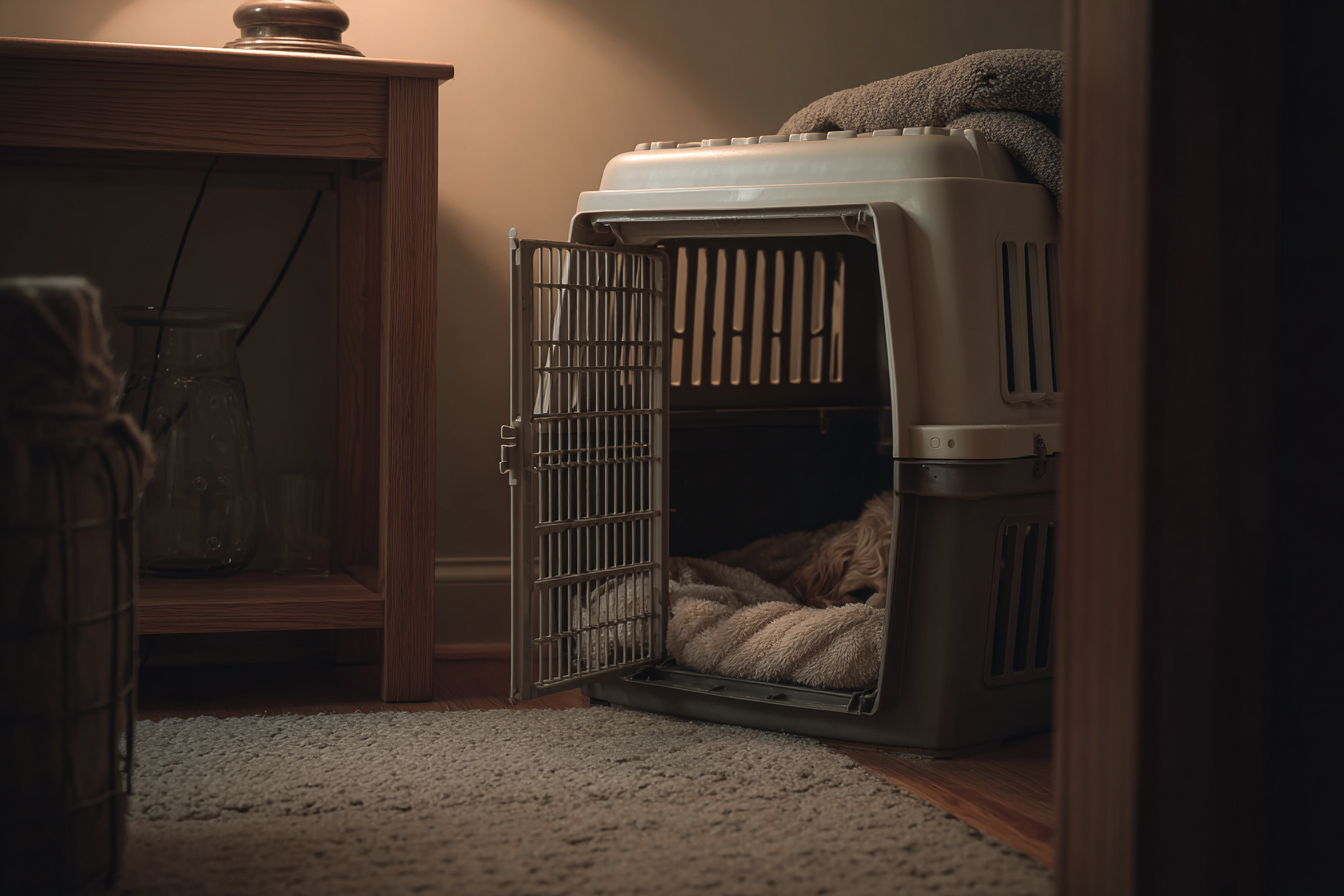
- Comfort Setup: Line the crate with soft bedding, such as a blanket or towel, ideally with a familiar scent from the puppy’s previous home.
- Size Check: Ensure the crate is just large enough to prevent soiling but comfortable for resting. Use a divider for puppies that will grow larger.
- Location: Place the crate in a quiet, low-traffic area where the family is present, avoiding drafts or direct sunlight.
2. Encourage Exploration:
- No Force: Allow the puppy to investigate the crate without pushing or forcing it inside, as this could create fear.
- Enticements: Sprinkle kibble or treats inside the crate and place a favorite toy near the entrance to draw the puppy in.
- Praise: Offer gentle praise when the puppy approaches or enters, reinforcing curiosity without overwhelming it.
3. Positive Reinforcement:
- Reward Entry: When the puppy steps inside, even partially, offer treats and calm praise (e.g., “Good job!”).
- Open Door: Keep the door open during initial sessions to allow the puppy to exit freely, building trust.
- Frequent Sessions: Repeat short exploration sessions multiple times daily to familiarize the puppy with the crate.
4. Gradual Door Closing:
- Timing: Once the puppy is comfortable entering and staying briefly (e.g., to eat treats), close the door for a few seconds while it’s engaged with food or a toy.
- Quick Release: Open the door before the puppy finishes eating to avoid associating door closing with confinement.
- Post-Crate Routine: Immediately take the puppy outside to eliminate after opening the door, reinforcing house training.
5. Extend Crate Time:
- Incremental Increase: Gradually extend the time the door is closed, starting with 1-2 minutes and building to 10-15 minutes as the puppy remains calm.
- Supervised Use: Use the crate during short absences (e.g., while cooking) to build comfort with confinement.
- Nighttime: Crate the puppy at night in your bedroom, ensuring frequent bathroom breaks to prevent accidents.
Tools and Tips
- Bedding: Use a blanket with the mother’s or littermates’ scent for young puppies to ease the transition.
- Toys: Safe chew toys or puzzle toys keep the puppy engaged during crate time.
- Troubleshooting: If the puppy shows anxiety, reduce the time spent in the crate and increase treats or play near the crate to rebuild confidence.
| Tool | Purpose |
| Blanket | Provides comfort and familiar scents to ease anxiety. |
| Treats/Kibble | Encourages exploration and entry into the crate. |
| Chew Toy | Keeps the puppy occupied and reduces boredom. |
| Crate Divider | Adjusts crate size for growing puppies to prevent soiling. |
Method 3: Clicker Training for Crate Acceptance
Clicker training makes communication clear and fun. By marking exact moments of desired behavior with a click, your puppy learns that calmness and curiosity around the crate pay off.
If you’re new to using a clicker, the clicker potty training guide for puppies explains how timing and consistency make all the difference in reinforcing good habits—skills that transfer directly to crate work.
Start by rewarding simple steps like looking at the crate, then entering, and finally resting calmly inside. Gradually increase duration and practice in different settings.
Steps
1. Introduce the Clicker:
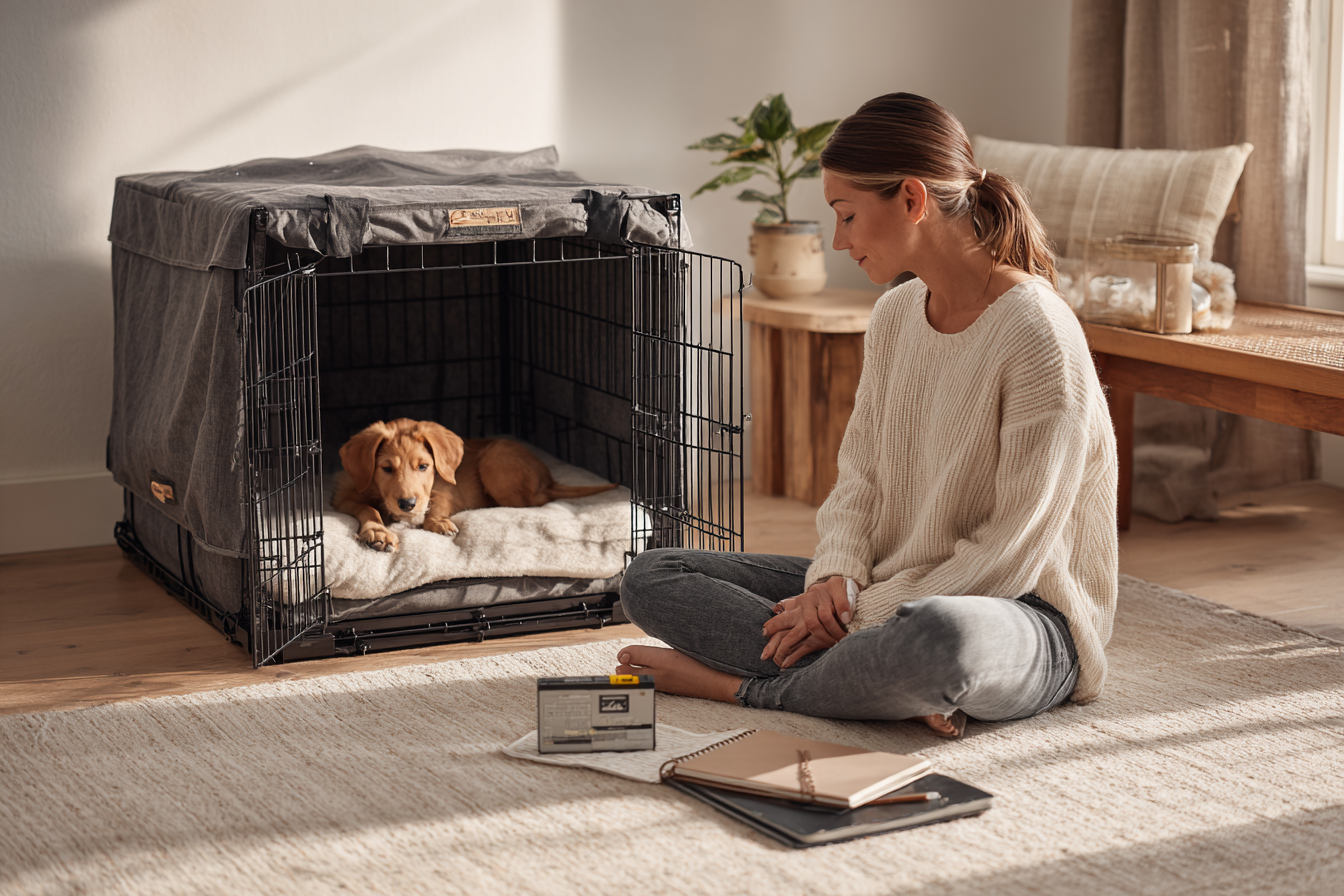
- Clicker Familiarity: If the puppy is new to clicker training, start by clicking and immediately giving a treat multiple times until the puppy associates the click with a reward.
- Timing: Ensure the click occurs the moment the desired behavior happens for clear communication.
2. Shape Crate Entry:
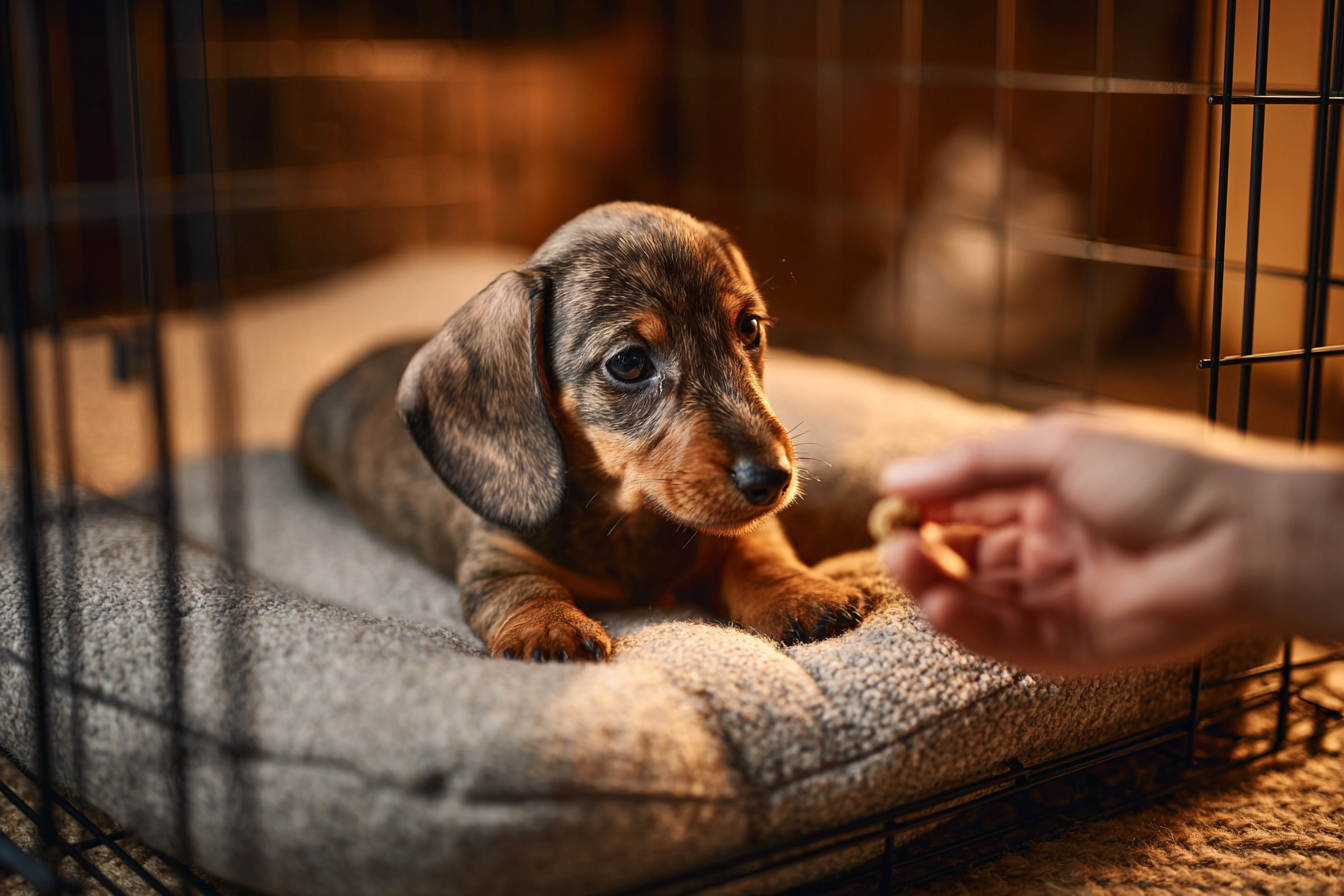
- Initial Steps: With the crate door open, click and treat when the puppy looks at the crate, then when it approaches, and finally when it steps inside.
- Cue Introduction: Use a command like “crate” or “go in” as the puppy enters, clicking and treating immediately.
- Progression: Reward small steps, such as placing one paw inside, before expecting full entry.
3. Increase Criteria:
- Staying Inside: Once the puppy enters reliably, click and treat for staying inside for a few seconds, gradually increasing the duration.
- Door Closing: Close the door briefly (5-10 seconds) while the puppy is calm, clicking and treating through the crate bars.
- Calm Behavior: Reward calm behaviors (e.g., sitting or lying down) inside the crate to encourage relaxation.
4. Build Duration:
- Gradual Increase: Extend the time the door is closed, clicking and treating intermittently for calm behavior.
- Handling Whining: If the puppy whines or scratches, wait for 3-5 seconds of quiet before clicking, treating, or opening the door to avoid reinforcing unwanted behavior.
- Distractions: Introduce mild distractions (e.g., walking away briefly) while rewarding calm behavior to build resilience.
5. Generalize the Behavior:
- Varied Settings: Practice crate training in different locations (e.g., another room) or with mild distractions (e.g., household noises) to ensure the puppy is comfortable in various contexts.
- Non-Separation Use: Use the crate when you’re home (e.g., during meals) to prevent it from being associated only with your absence.
- Nighttime: Crate the puppy beside your bed, using the clicker to reward calm behavior during nighttime sessions.
Tools and Tips
- Clicker: A small device that makes a distinct sound to mark desired behaviors.
- Treats: High-value treats ensure motivation; vary treats to maintain interest.
- Chews: Use safe chews like bully sticks or stuffed Kongs for longer crate sessions.
- Troubleshooting: If the puppy shows fear, backtrack to rewarding simpler behaviors (e.g., looking at the crate). For persistent whining, ensure the puppy’s physical needs (bathroom, exercise) are met before crating.
Tool | Purpose |
| Clicker | Marks precise moments of desired behavior for clear communication. |
| Treats | Reinforces crate entry and calm behavior. |
| Stuffed Kong | Encourages relaxation during longer crate sessions. |
| Hot Water Bottle | Mimics littermate warmth for young puppies at night. |
General Tips for Success
- Consistency: Follow a regular schedule for crate sessions to build habits.
- Avoid Punishment: Never use the crate as a punishment, as this can create fear and resistance.
- Exercise and Enrichment: Provide ample playtime, walks, and mental stimulation outside the crate to prevent restlessness.
- Monitor Duration: Limit crate time based on the puppy’s age (e.g., 1 hour per month of age plus 1) to avoid stress or accidents.
- Medical Checks: If the puppy soils the crate frequently, consult a veterinarian to rule out medical issues like urinary tract infections
- Patience: Crate training can take days to weeks, depending on the puppy’s temperament and past experiences. Adjust the pace to their comfort level.
- Positive Environment: Keep the crate area calm and free from loud noises or sudden disturbances to maintain its role as a safe space.
If your puppy struggles at night, refer to this helpful resource on crate training at night and while you’re away for maintaining calm routines.
Addressing Common Challenges
- Whining or Barking: Ignore whining and reward quiet moments to avoid reinforcing unwanted behavior. Ensure the puppy’s needs (bathroom, hunger, exercise) are met before crating.
- Accidents in Crate: Check if the crate is too large or if the puppy is crated too long. Increase bathroom breaks and clean accidents with an enzymatic cleaner to remove odors.
- Fear of Crate: Slow the process, rewarding small steps like approaching the crate. Use higher-value treats or toys to increase motivation.
- Separation Anxiety: Gradually increase alone time in the crate while you’re home to desensitize the puppy to your absence.
Conclusion
Crate training is not about restriction it’s about giving your puppy a safe, peaceful space to rest and reset. By using positive reinforcement and patience, you’ll nurture confidence, trust, and independence that last a lifetime.