




Bringing a new puppy home is an adventure filled with joy, but it also comes with the very real challenges of teaching boundaries and ensuring safety. Among the most valuable tools for this journey is the crate. When implemented correctly, a crate becomes your puppy’s safe haven—a personal bedroom where they can relax and feel secure. However, the process of crate training the puppy can sometimes feel confusing for both owner and pet. This is where the precision and power of the clicker method transforms the experience.
The importance of crate training extends to every part of your life with your dog. For you, it provides a management tool for safe confinement, preventing destructive chewing and aiding immensely in house training. For your puppy, the crate satisfies what renowned animal behaviorist Patricia McConnell describes as a “den instinct,” offering a quiet, secure retreat from a busy household. The psychology of combining this with a clicker is profound. As clicker-training pioneer Karen Pryor established, the clicker isn’t just a noisemaker; it’s a powerful communication tool. It uses “marker training” to tell your dog, with absolute clarity, “Yes! That exact behavior earns the reward.” This eliminates guesswork. Instead of wondering why they are being crated, your puppy is actively learning and being rewarded for choosing to go in and settle. This method builds confidence, stimulates your puppy’s mind, and strengthens your bond through positive, force-free interaction, creating a willing partner rather than a reluctant captive.
If you’re new to the basics, reviewing this guide on how to crate train a puppy can help you understand timing, setup, and daily structure before adding the clicker component.
The Psychology Behind Clicker Crate Training
As clicker-training pioneer Karen Pryor established, the clicker isn’t just a noisemaker—it’s a communication bridge. It allows you to mark the exact moment your puppy performs a desired behavior, making learning faster and stress-free. When paired with crate training, the clicker teaches your puppy that entering and relaxing inside the crate earns rewards. This builds confidence and strengthens your bond through positive, force-free interaction.
For owners who enjoy precision-based methods, the crate training clicker approach offers structured, step-by-step guidance on shaping calm crate behavior through timing and consistency.
The Tools for Success
Before you begin, gathering the right tools is essential for a smooth process.
- The Crate: Choose a crate that is just large enough for your puppy to stand up, turn around, and lie down comfortably. A crate that is too large can hinder house training. Wire crates with dividers are ideal.
- A Clicker: This small handheld device makes a consistent, unique sound. It will become your “marker” for correct behavior.
- High-Value Treats: You will need a large supply of tiny, soft, and delicious treats. Pieces of boiled chicken, cheese, or commercial training treats are perfect. Have a portion of your puppy’s daily kibble available for less exciting steps.
- A Comfortable Mat or Bedding: A washable mat makes the crate inviting.
- A Stuffy Toy (like a Kong): This is invaluable for creating long-lasting positive associations.
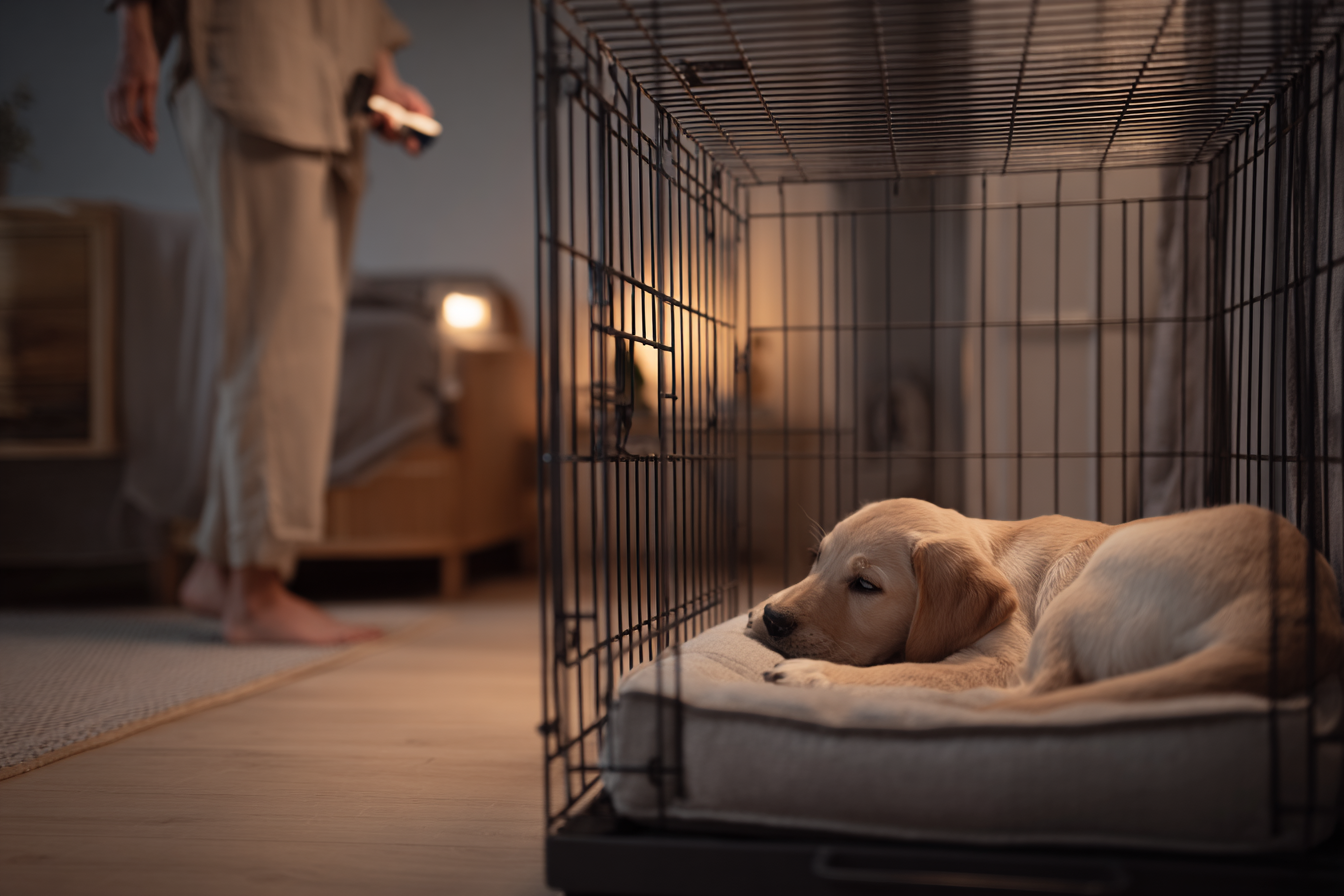
If your pup struggles to settle overnight, pairing this with crate training at night and while you’re away ensures smoother sleep routines and consistency.
The Foundation: “Charging” the Clicker
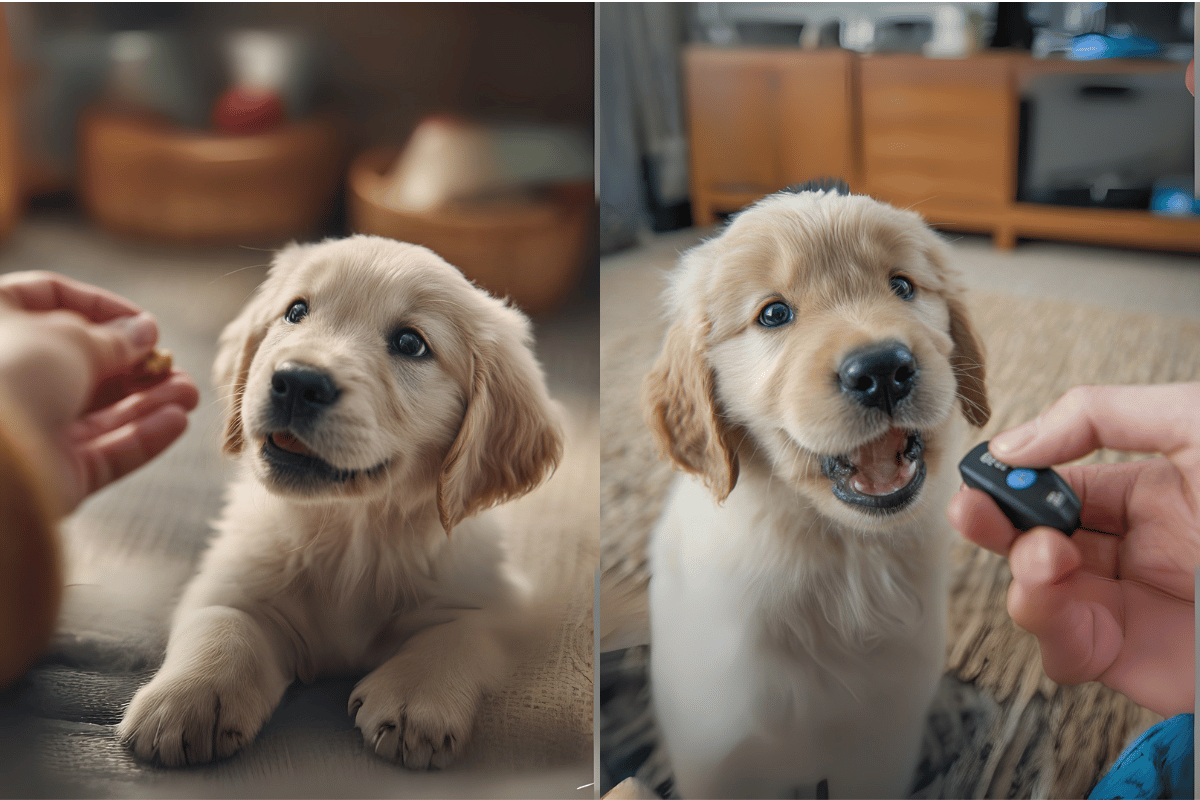
Before the crate is even involved, your puppy must learn what the clicker means. This process is called “charging” or “loading” the clicker.
- In a quiet room with no distractions, have your treats ready.
- Simply click the clicker and immediately give your puppy a treat. Do this 10-15 times.
- Do not ask for any behavior. The sequence is always: CLICK -> TREAT.
- Your puppy will quickly learn that the click sound predicts something wonderful is coming. The clicker now “marks” the exact moment they do something right.
The Step-by-Step Clicker Crate Training Guide
This process uses “shaping,” which means we reward small, incremental steps toward the final goal of a puppy happily and voluntarily resting in a closed crate.
Phase 1: Creating a Positive Association
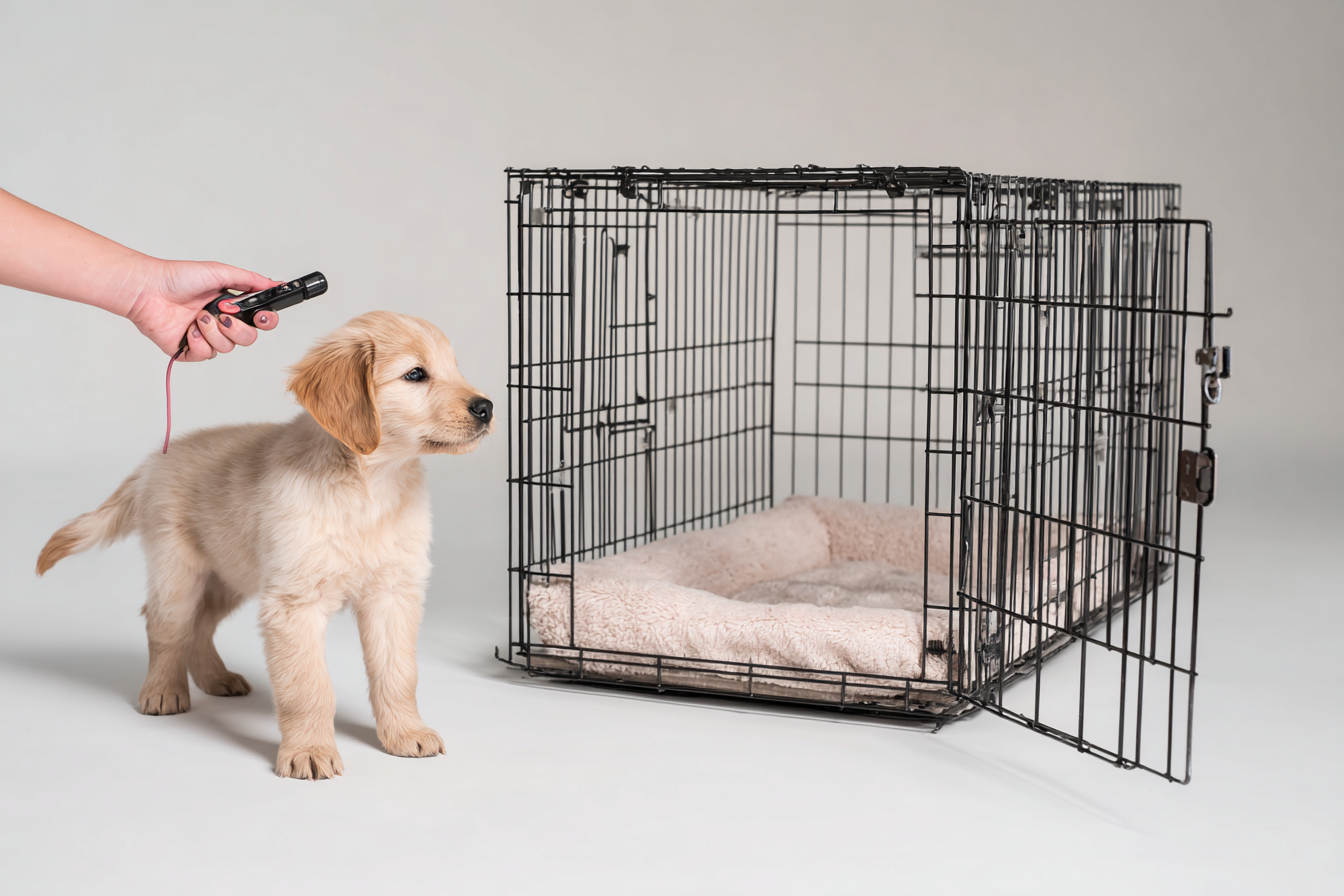
- Introduction to the Crate: Place the crate in a common area with the door removed or securely tied open. Let your puppy investigate it freely.
- Click for Interaction: Any interaction with the crate gets a click and a treat. If they look at the crate: CLICK -> TREAT. If they take a step toward it: CLICK -> TREAT. If they sniff the entrance: CLICK -> TREAT.
- Shaping the Entry: Now, raise your criteria. Wait until your puppy puts a single paw inside the crate. The moment they do, CLICK -> TREAT, throwing the treat outside the crate so they come out to get it. This encourages them to make the choice to go back in. Repeat.
- All the Way In: Next, only click and treat when all four paws are inside the crate. Toss the treat outside after each success to reset the behaviour.
Phase 2: Adding the Cue and the Door
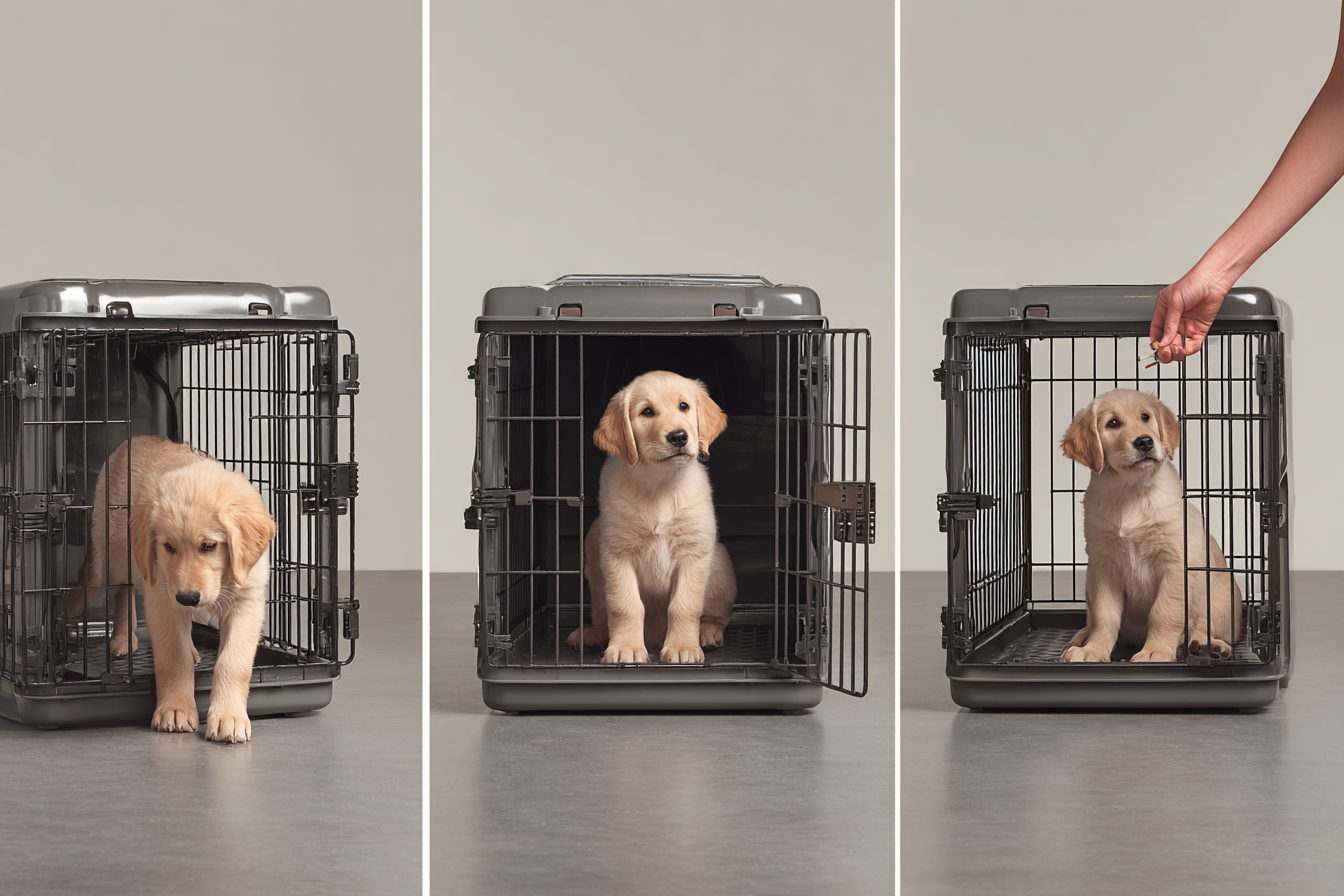
- Naming the Action: Once your puppy is confidently rushing into the crate with all four paws, you can add a verbal cue. Just as they are about to enter, say “Crate!” Then, when they are inside, CLICK -> TREAT.
- Reintroducing the Door: Now, reattach the door but keep it fully open. Practice the “Crate” cue a few more times with the door in place, so they get used to its presence.
- Shaping Door Movement: With your puppy inside and eating a treat, slowly move the door an inch toward closed. If they stay calm, CLICK -> TREAT. Open the door. Repeat this, moving the door a few more inches each time, only clicking and treating for calm behaviour. The goal is to close the door completely for just a second before opening it and rewarding.
Phase 3: Building Duration and Distance
- The “Settle” Command: Once the door can be closed, you can shape calm behaviour inside. Wait for your puppy to naturally lie down. The moment their elbows touch the floor, CLICK -> TREAT. You can deliver the treat through the wires to keep them settled.
- Increasing Time: Use a release word like “Okay!” to signal they can come out. Start asking for just a few seconds of settled behavior before you click, treat, and release. Gradually increase the time between rewards.
- Adding Distance: Ask your puppy to “crate” and settle. Take one small step back from the crate. If they remain settled, step forward, CLICK -> TREAT. Slowly increase the distance and duration you are away. If they get up, you’ve asked for too much too soon; return to an easier step.
For those focusing on broader positive reinforcement, check out this clicker training guide for puppy potty training — the principles directly complement crate work and overall obedience.
Troubleshooting Common Clicker Training Hurdles
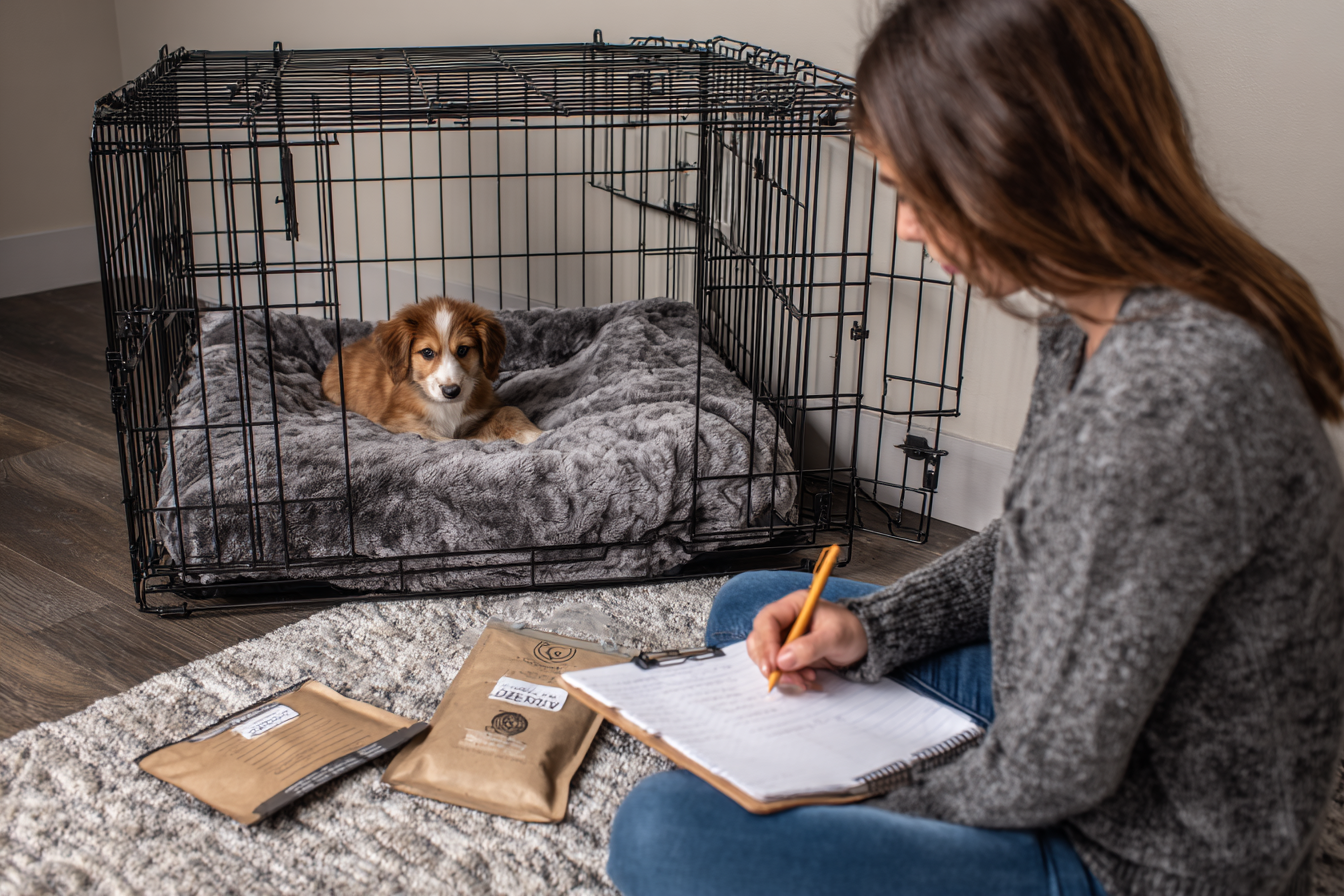
- The Puppy is Scared of the Click Sound: Muffle the clicker in your pocket or under your leg for the first few sessions. You can also use a verbal marker like a sharp, consistent “Yes!” instead.
- They Freeze or Don’t Offer Behaviors: You may have raised the criteria too quickly. Go back to a step they mastered and reward enthusiastically. Keep sessions short (under 5 minutes) and fun.
- Whining in the Crate: Ensure they don’t need a potty break. If they whine for attention, wait for a moment of silence—even a split second—and CLICK! to mark the quiet, then treat. You are now shaping calm behavior.
Conclusion:
Learning how to crate train your puppy with clicker is about more than just creating a dog who uses a crate. It’s about building a shared language. The clicker gives you the power to communicate with crystal clarity, transforming a potentially stressful process into a series of fun, solvable puzzles for your puppy. This method empowers them to make good choices and be an active participant in their own learning. By investing in crate training with clicker, you are not just crate training; you are laying the foundation for a lifetime of effective communication and mutual trust, making all future dog training easier and more enjoyable for both of you.